
Summarize this article with:
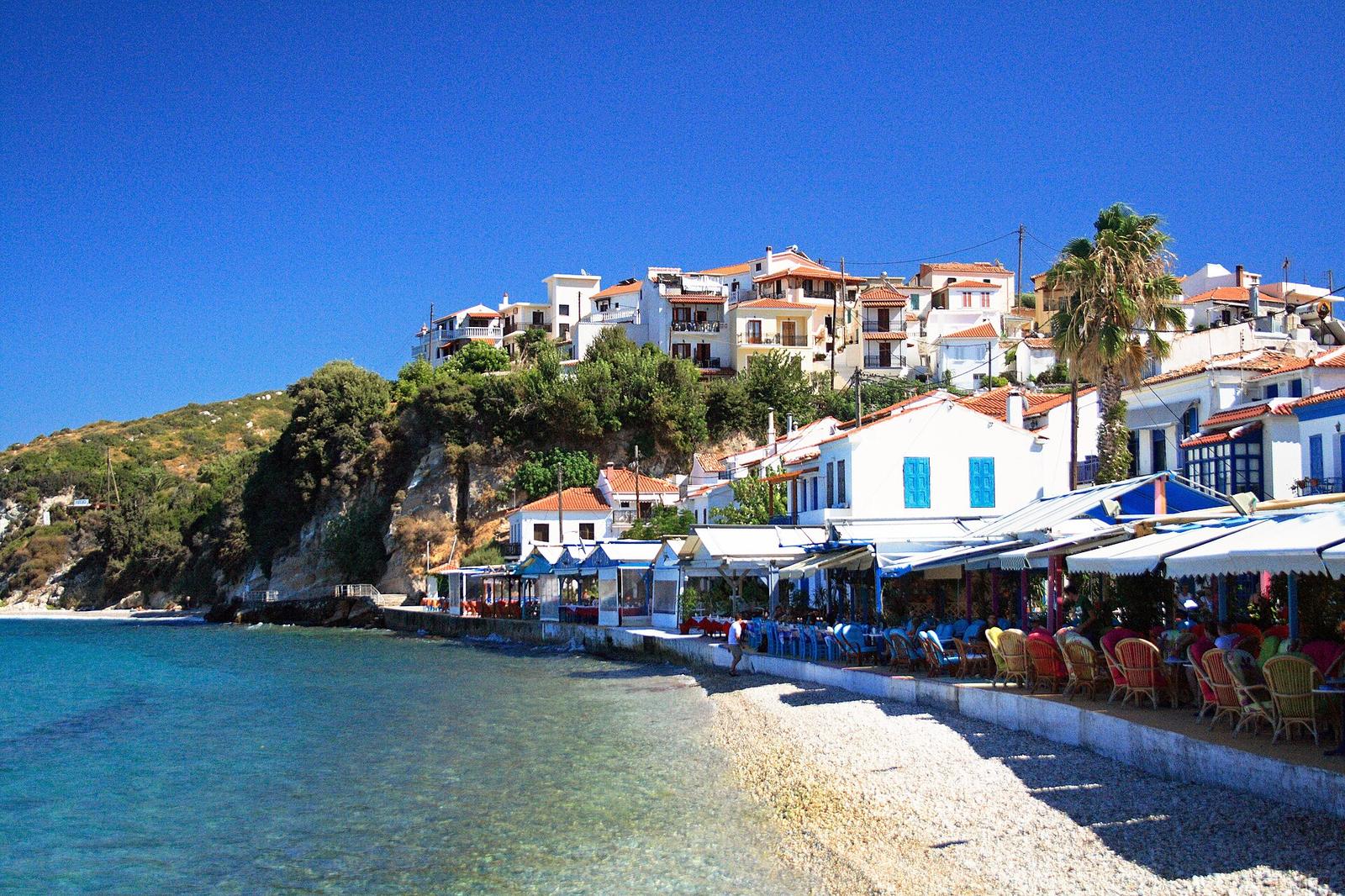
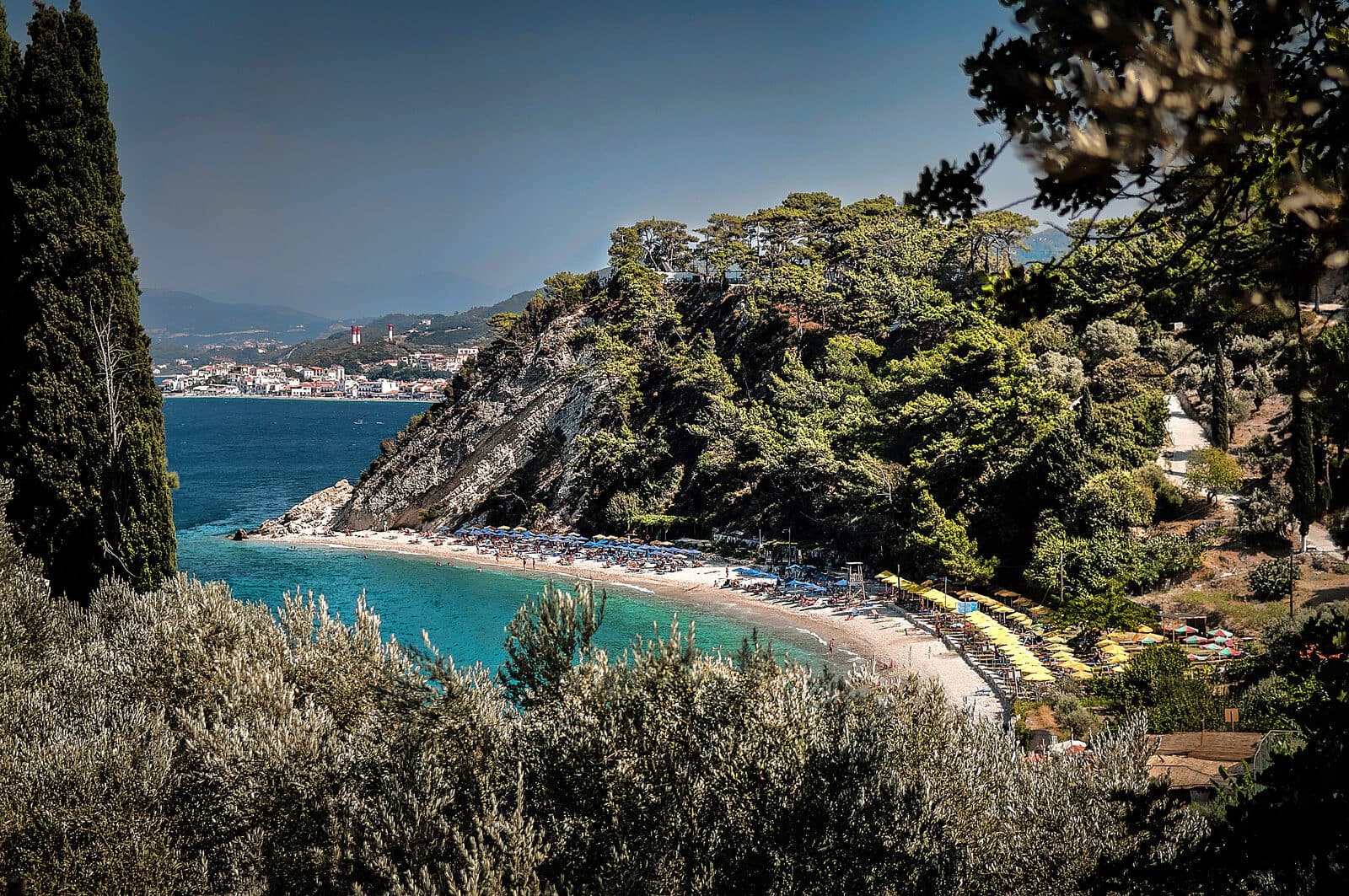
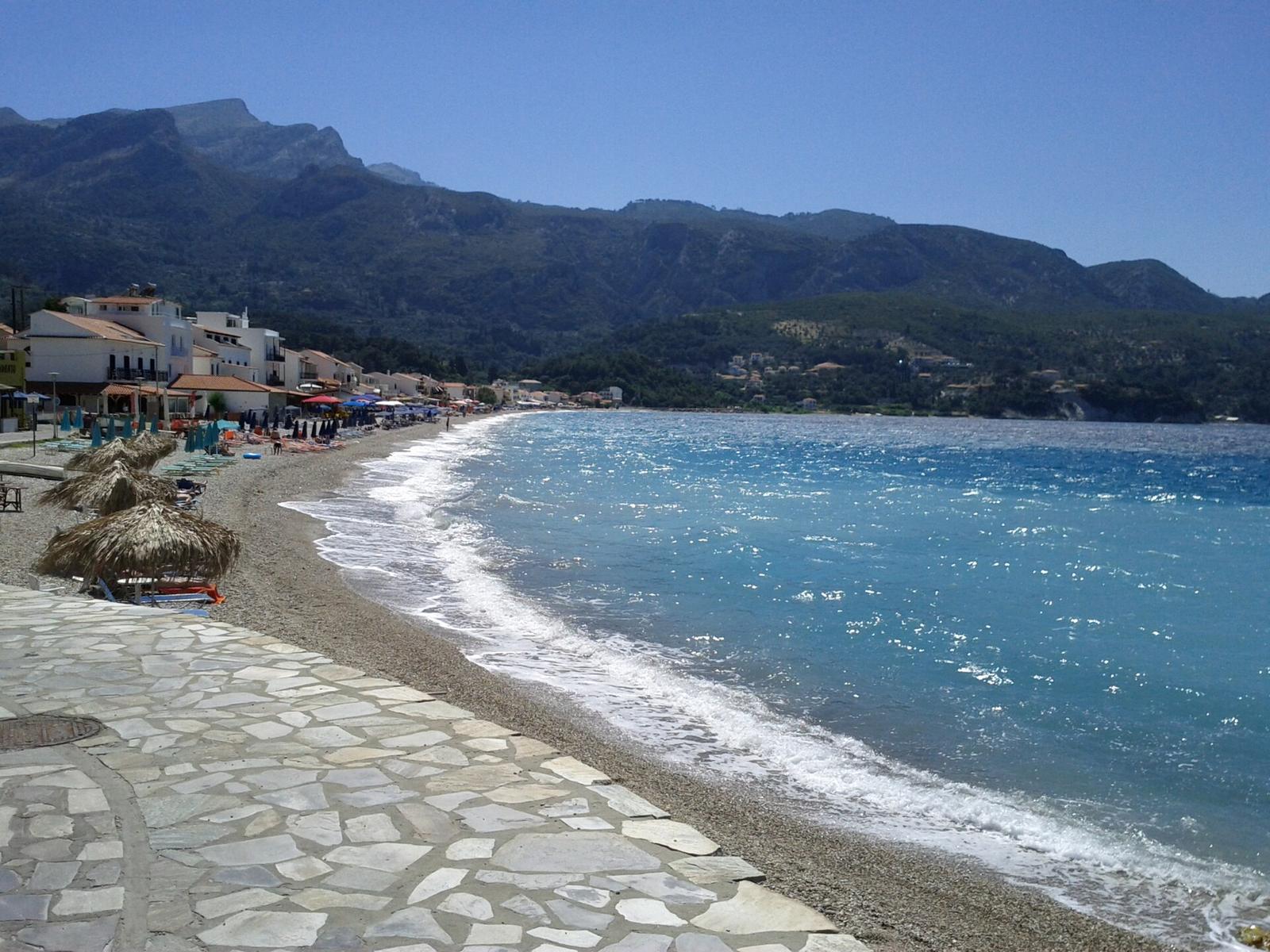
Two pebble beaches just west of Kokkari, on the coast road towards Karlovasi. Lemonakia comes first, then Tsamadou, a narrow bay about 400 m long with pines and olive trees running down to the water. The swimming is the reason to come: deep, clear water over pebbles. Both fill up in July and August, so go early or late, and bring water shoes.
What to see and do
- 1Swimming in clear water: the main event. Tsamadou's water is cold and deep, and the bottom drops quickly over rock and pebbles, so getting in and out can be awkward. Water shoes help, and the clear water is good for snorkelling.
- 2Easy from Kokkari: the beaches are about 2 km west of the village, on the road towards Karlovasi. From the parking area it is roughly 200 m down a path and steps to the shore, so there is no need for an organised trip.
- 3Beachside tavernas: three places share Tsamadou: the Tsamadou beach bar, Krista (simpler, well shaded by trees) and Navagos at the end of the bay. You can eat at your sunbed or in the restaurant, and Navagos has a pool for guests aged 15 and over.
- 4Go early or late: the beach gets very busy in high season and parking is hard to find mid-morning in July and August. Mornings and early evenings are calmer, and there are still unequipped stretches if you only bring a towel.
Practical tips for Tsamadou and Lemonakia
Where the beaches sit. Driving west from Kokkari on the coast road to Karlovasi, you pass Lemonakia first, then Tsamadou, then Avlakia and Tsabou. This north-coast road, the EO 62, is the best-maintained artery on the island, so the drive is easy, and Kokkari to Karlovasi takes about 30 minutes in total.
The shape of Tsamadou. Sources put the bay at 380 to 400 m long, with an average width of only about 8 m, so the strip of pebbles between the cliffs and the sea is narrow. It is described as two pebble coves under the cliffs, and it is one of the most photographed beaches on Samos.
Lemonakia, the first cove. Lemonakia is the pebble beach you reach first from Kokkari, on the same stretch of coast. Far less detail is published about it than about Tsamadou, so we don't give it separate facilities or prices here. Treat it as the nearer, simpler option when the road above Tsamadou is already full of parked cars.
Getting there by bus. The KTEL line from Vathy to Karlovasi stops at Tsamadou on the main road. One timetable lists 7 weekday departures from Vathy (08:30, 11:00, 12:20, 14:00, 17:00, 18:30 and 19:30) and 7 back (07:30, 09:00, 11:20, 13:00, 15:30, 17:30 and 18:50).
Weekend buses. The same timetable shows 3 departures on Saturdays and Sundays (08:30, 14:00 and 17:00) and returns at 10:00, 13:00 and 15:30, while another guide says island buses do not run on Sundays. Published schedules only run a few weeks ahead, so check ktelsamos.gr before you rely on a weekend bus.
Fares and tickets. No fare is published for the Tsamadou stop itself. The full Vathy to Karlovasi journey takes about 40 minutes and is listed at around 4.50 euros, so a ticket to the beach should cost less. Tickets are sold online on ktelsamos.gr, and on the bus it is usual to pay the driver in cash.
Arriving by air. There is no direct bus from the airport to Kokkari: you change in Vathy, which turns a drive of about 25 minutes into a journey of nearly 1 hour 45 minutes. Published taxi estimates from the airport to Kokkari range from about 26 to 35 euros, and a night surcharge applies.
By car or motorbike. The drive from Kokkari is only 2 km, and the beach is also easy to reach from Vathy and Karlovasi along the coast road. Parking is free but sits about 200 m above the beach, and it fills up fast in high season. The last stretch is a path with steps, so pack light.
Facilities. Part of Tsamadou is organised, with sunbeds, umbrellas, showers, changing rooms, toilets and access for visitors with reduced mobility. Other sections have no equipment at all, and you are free to lay a towel there. The tavernas and beach bars along the shore serve coffee, drinks and meals after a swim.
Sunbeds and prices. Sunbeds are not free at the organised sections. A visitor review from September 2025 reported 10 euros for two sunbeds and an umbrella, rising to 20 euros for the front row; Navagos also lists 10 euros and opens from 11:00 to 19:00. One local site says no payment is required, so ask before you settle in.
Wind and waves. The bay is not fully sheltered. It faces the northern Aegean, and when the meltemi blows in summer it can raise waves all along this coast. The western end of Tsamadou is usually calmer. On a rough day, the beach in Kokkari village is the short fallback, and windsurfers head for the Kokkari windsurf school instead.
Swimming safely. The seabed drops steeply over pebbles and rock, so don't dive into water you don't know. Most organised beaches in Greece use flags, and a red flag means no swimming. Where there is no lifeguard, flag or sign, ask locals before going in, and follow local advice if jellyfish are around.
Naturism. Sources disagree on this point. One local guide says the east side of Tsamadou is set aside for naturists and calls it the island's only official nudist beach, while the regional tourism office says it was historically nudist and that few naturists come today, mostly to the right-hand end.
A hike before the swim. Kokkari is also a walking base. The marked Kokkari to Vourliotes and back route covers 10 km in about 4 hours 15 minutes, graded 2 out of 5, and a 9.4 km Kokkari loop takes about 4 hours. Walk in the cool of the morning, then come down to Tsamadou for the afternoon.
Leave no trace. Take your rubbish with you, and never leave glass: from April to October the fire risk is high, and starting a wildfire is a criminal offence in Greece even by accident. Barbecues are out, and Greek rules ban tent camping and camper vans on beaches, so plan to sleep in Kokkari.
Tours near Tsamadou & Lemonakia
No beach-specific tour is confirmed yet. Tsamadou and Lemonakia are an easy trip from Kokkari, no tour needed. Browse every verified Samos tour for day-trip options.
See all Samos tours & tickets →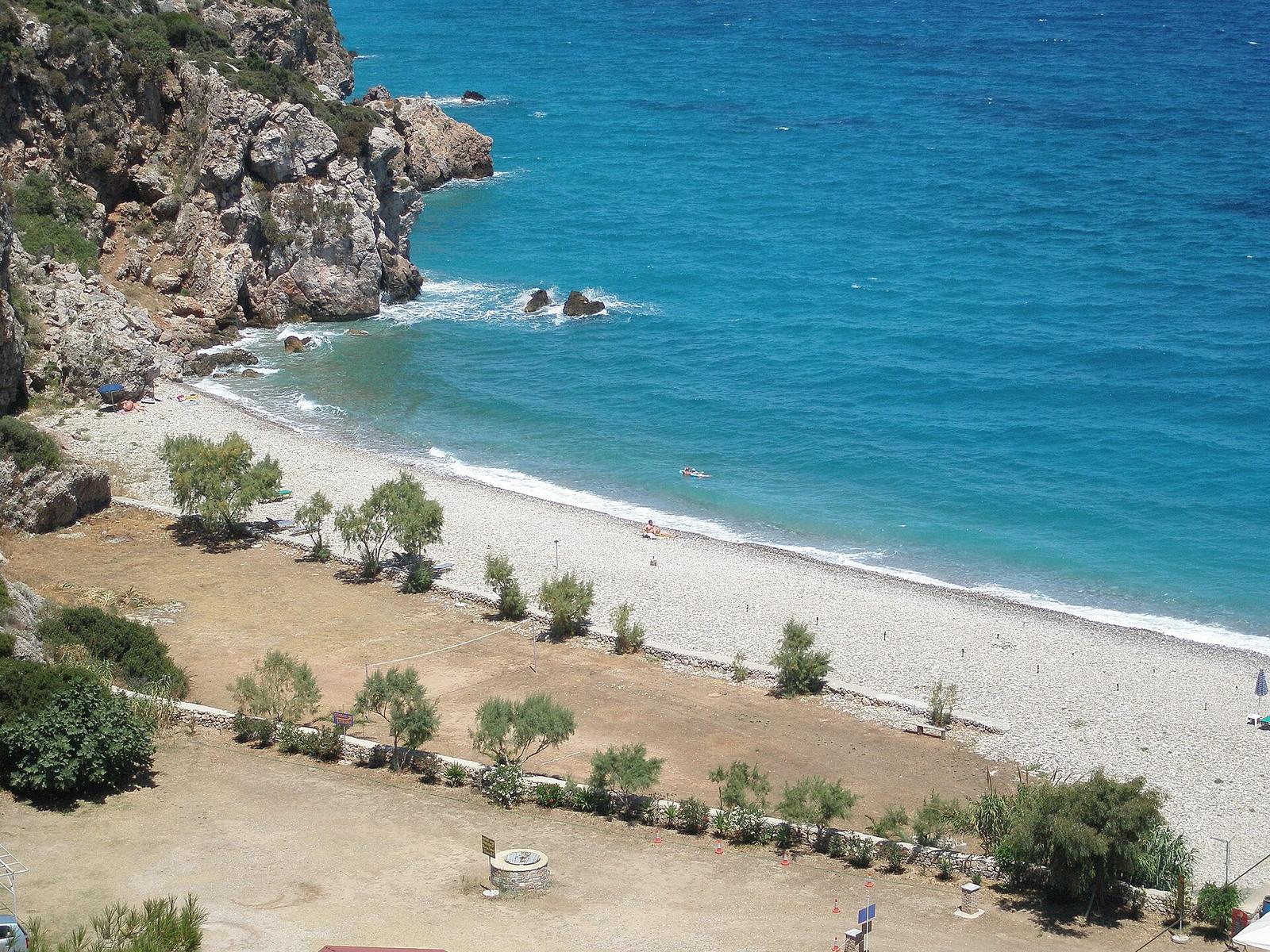
Frequently asked questions
Both are pebble beaches, with small and large stones at Tsamadou. Water shoes make walking in and out much more comfortable.
Explore KokkariNo: both beaches are free to use and easy to reach from Kokkari. Sunbeds at the beach bars are usually paid in season, and some stretches have no sunbeds at all.
See what a Samos trip really costsJune to September for warmer water; early morning or late afternoon to avoid the busiest hours in July and August. On days when the meltemi blows, expect waves.
See the best months to visitPractical details (opening times, prices) change. Verify before you go. Last updated September 2026.