
Summarize this article with:
The Heraion was the main sanctuary of ancient Samos, set on the banks of the Imvrasos river where, according to legend, the goddess Hera was born. It lies about 6 km south-west of the ancient city (today's Pythagoreio), linked to it by a sacred way, and pilgrims also arrived by sea. For a thousand years its focus was the altar of Hera and the successive temples that faced it, surrounded by treasuries, stoas and votive offerings sent from across the ancient world. The last great temple, begun under the tyrant Polycrates by the architects Theodoros and Telecles, is regarded as the first monumental free-standing Ionic temple, and Herodotus considered it the largest in Greece. It was never finished: no roof tiles have been found, and work stopped after Polycrates' death in 522 BC. With Pythagoreio it forms one UNESCO listing, inscribed in 1992.
What to see
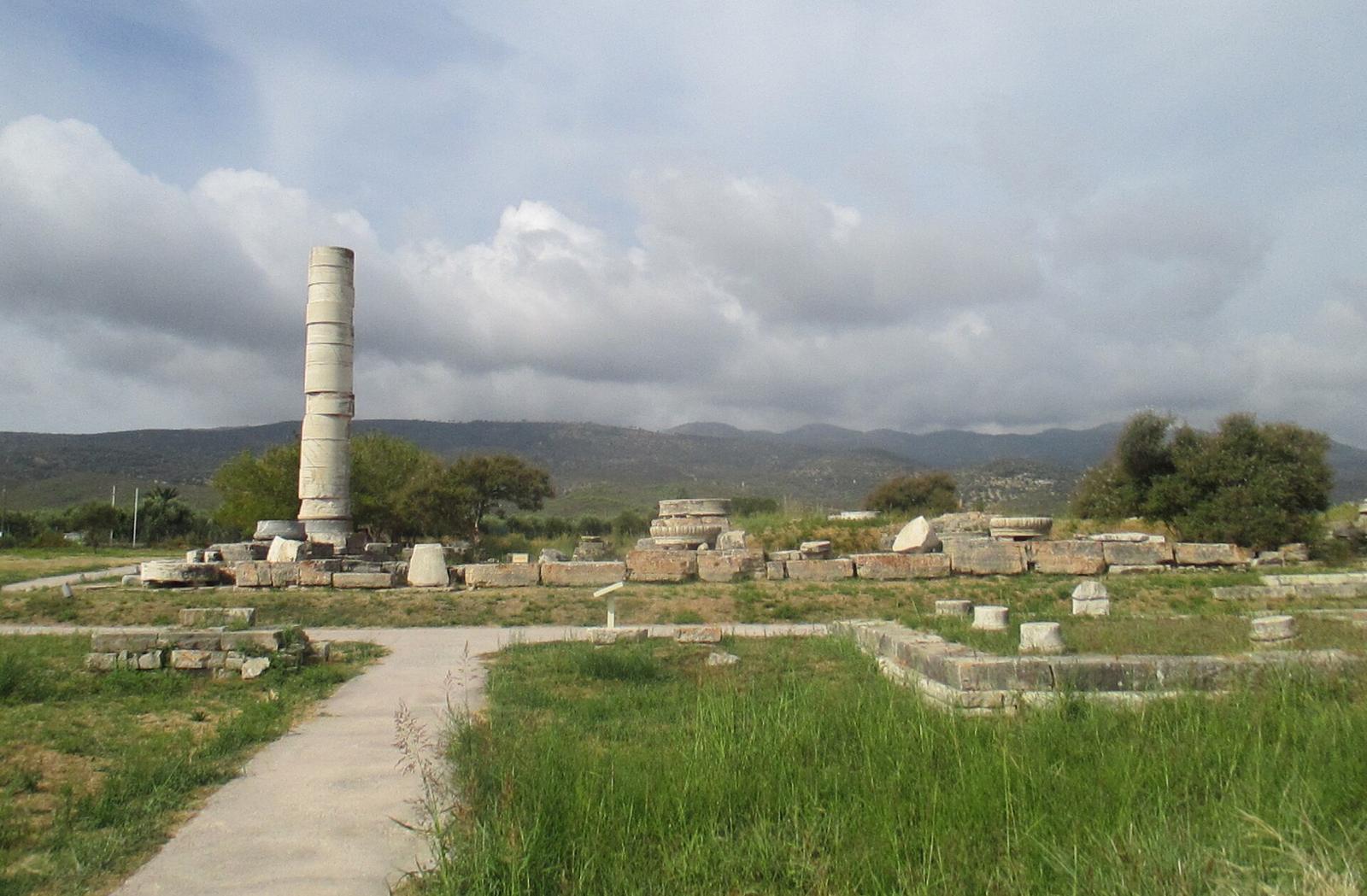
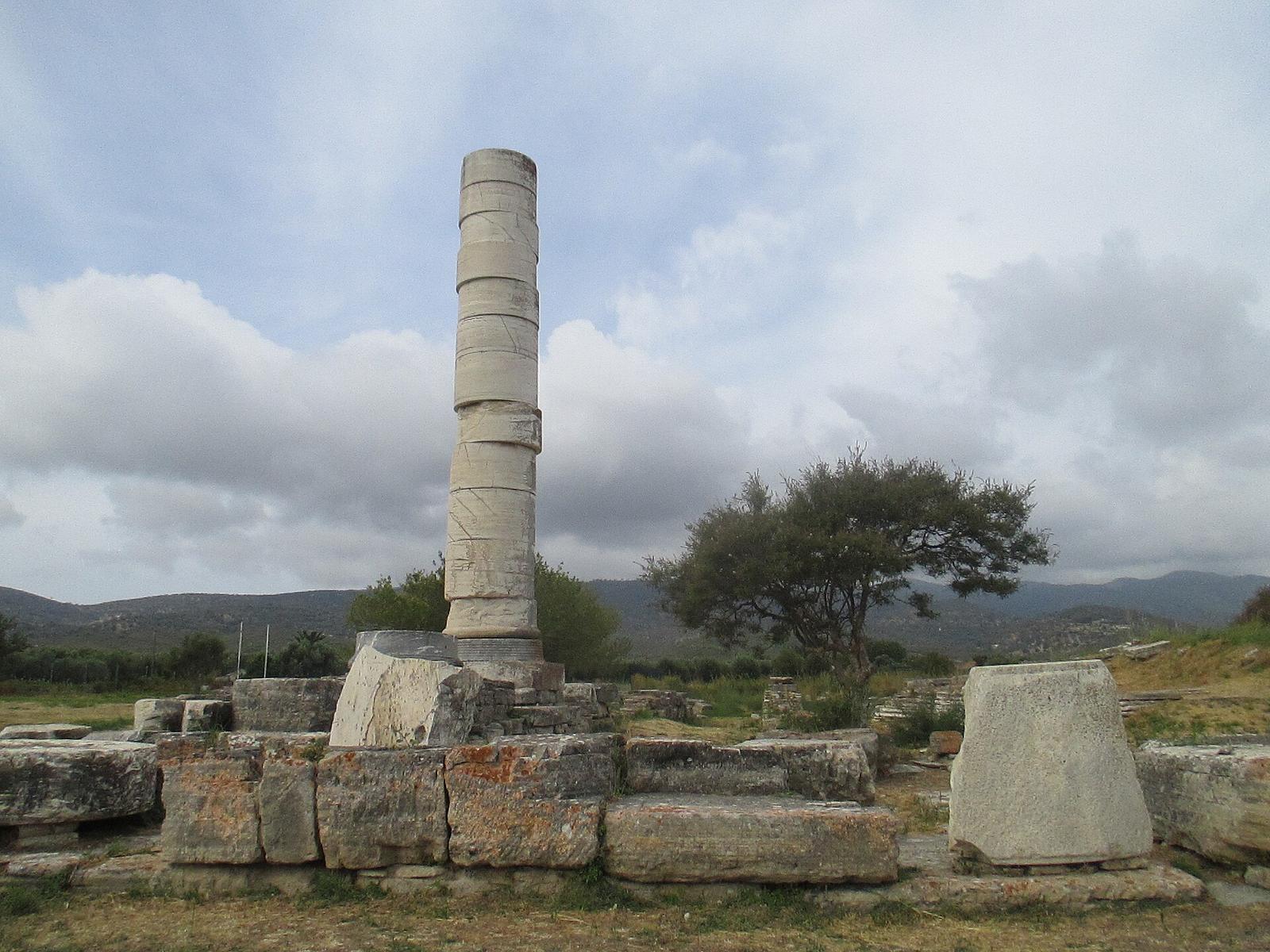
- 1The lone standing column: the only column left in place, on the south side, preserved to about half its original height: the landmark of the site.
- 2The temple foundations: walk the outline of a dipteral temple 55.16 m wide that once had 155 marble columns of four different sizes and types; the foundations survive up to the stylobate.
- 3The Great Altar: the heart of the sanctuary, in the same position through seven successive phases from the Late Bronze Age; it took its monumental form around 560 BC and was rebuilt in marble in Roman imperial times.
- 4The sacred way: the processional road, built in the late 7th century BC, ran between the sanctuary and the town of Samos; a colossal kouros found in 1980, while searching for the sanctuary's main entrance, is now in the Samos museum.
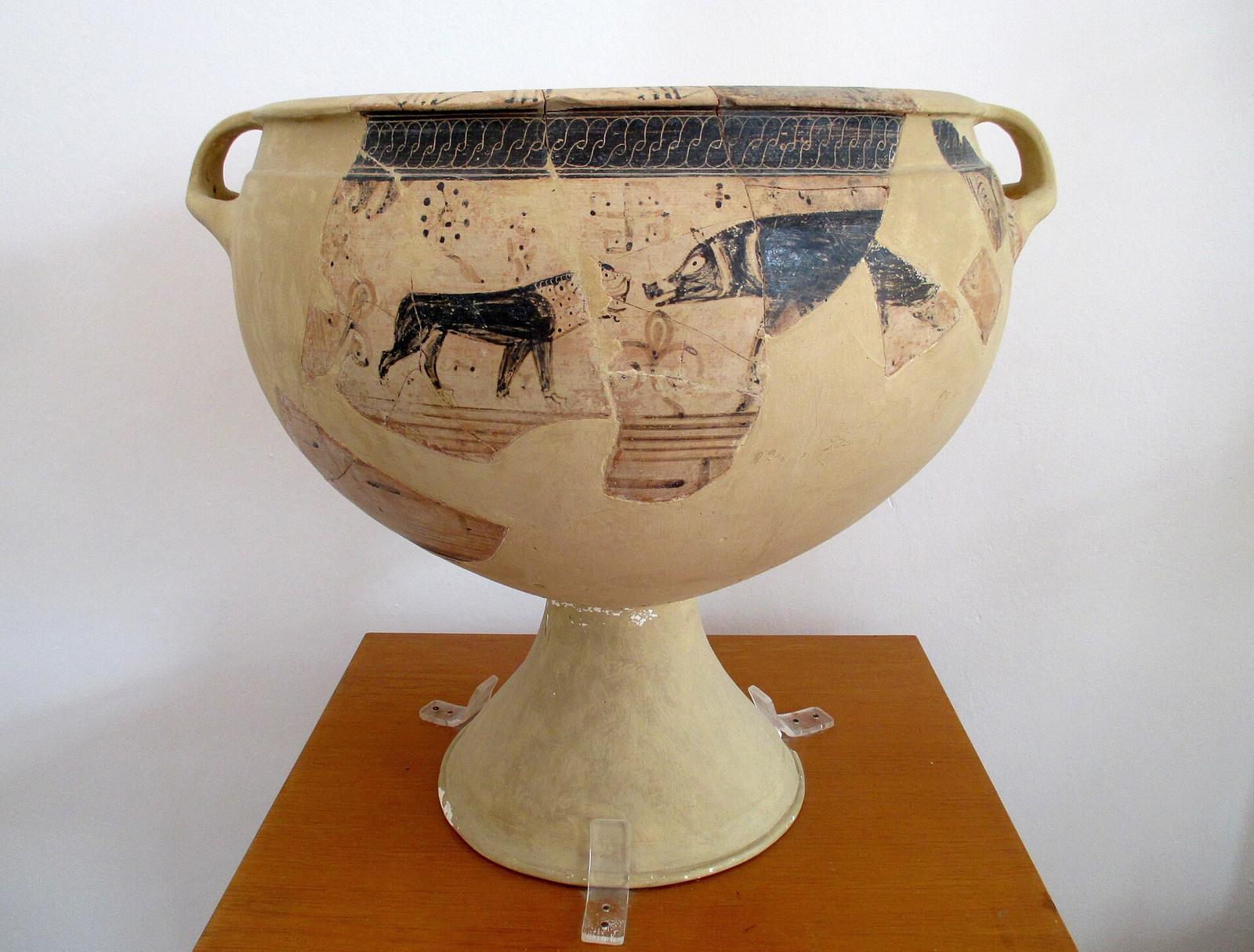
- 5Context in the museum: The old 1912 building of the archaeological museum in Vathy holds the Heraion finds (statues, vases and offerings in bronze, ivory and wood), so it is the natural companion visit.
Planning your visit and reading the ruins
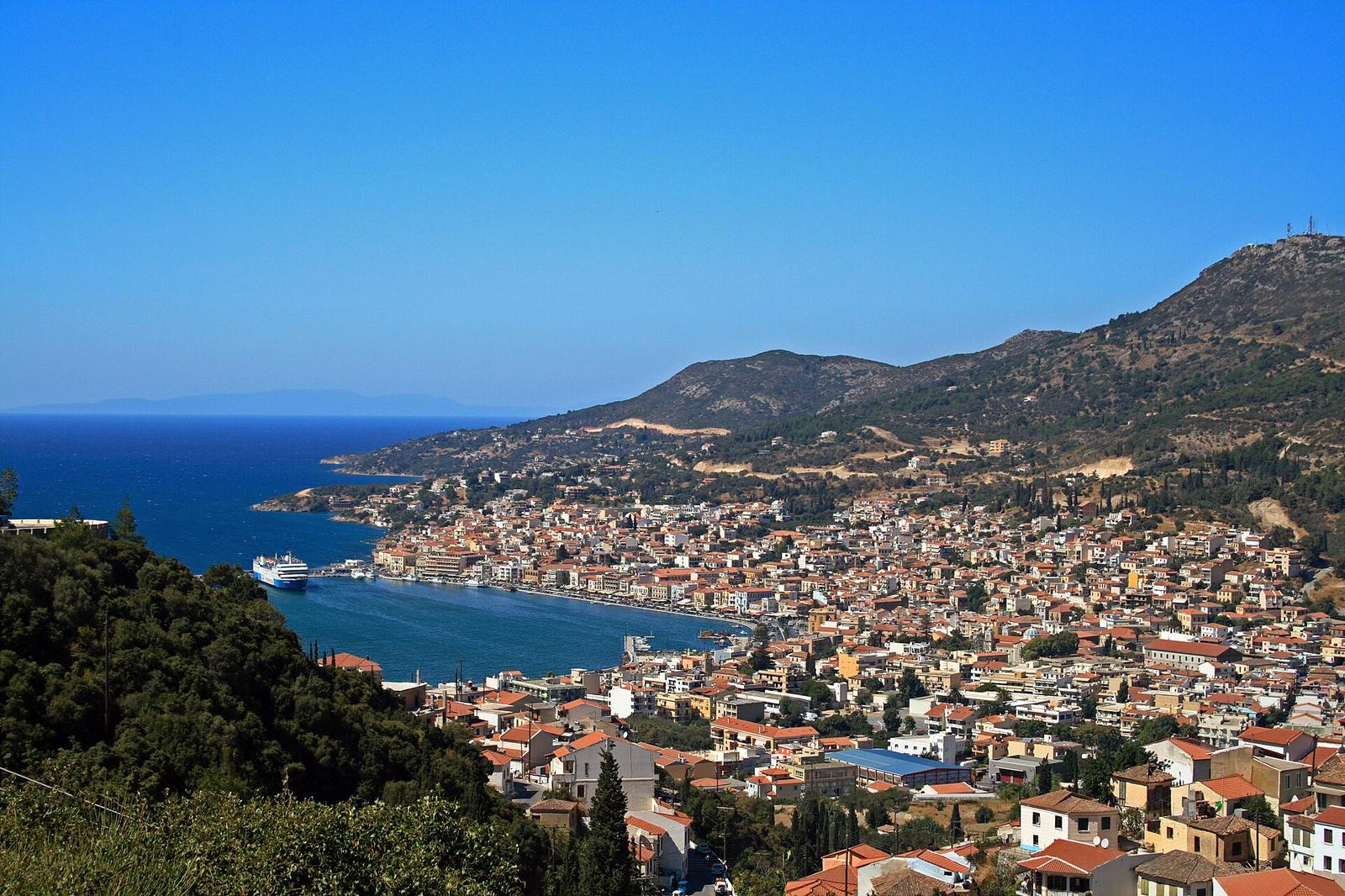
Getting there. The Heraion sits by the village of Ireon, 8 km from Samos airport, about 12 minutes by road; a taxi from the airport costs 14-20 €. By car it is the easiest of the island's ancient sites to reach, and Pythagoreio, the ancient city it served, lies about 6 km to the north-east.
Without a car. The bus is awkward. The only airport line runs terminal, Pythagoreio, Mytilinioi and Vathy, and the onward local service west to Ireon is infrequent and connects poorly. No source we checked confirms a stop at the sanctuary itself, so if you rely on buses, ask at Pythagoreio before you set off.
Opening days. The site opens 08:30 to 15:30 all year, last entry 15:10, and is closed on Tuesdays, as well as on 1 January, 25 March, 1 May, Easter Sunday and 25 and 26 December (Good Friday 12:00-17:00). Entry is free on 6 March, 18 April, 18 May, the last weekend of September and 28 October.
On the ground. The site is flat and open with little shade, so come early and bring sun protection and water. The ministry listing marks the site as having facilities for visitors with disabilities. Two official ministry pages give different ticket prices, so check the fare at the entrance rather than relying on a figure printed online.
Older than the temples. Worship here goes back a very long way. Excavators found a small stone altar and a temple-like building for a wooden cult statue dating from the Mycenaean period. North of the great temple lay a prehistoric settlement of mud-brick houses from around 2200 BC, since reburied to protect it, so nothing of it is visible today.
A temple built over a temple. Before Polycrates, the sanctuary had a large dipteral temple named after Rhoikos, from around 570-560 BC. The later temple follows the outline of its cella and porch almost exactly but is far bigger: a third row of columns was added front and back, apparently on the model of the Temple of Artemis at Ephesus.
Reading the columns. The Greek culture ministry gives the Polycrates temple as 108.63 by 55.16 m. Its 155 columns stood in double rows along the long sides and in triple rows across the ends, with eight at the east front and nine at the west. The columns were marble, the rest limestone.
The altar in detail. The Great Altar's foundations measure 36.50 by 16.50 m. Its 8th and 7th century BC phases were not aligned with the temple; around 560 BC it was rebuilt on the temple's axis. A wall 5 to 7 m high closed the sacrificial area on three sides, with an inner frieze of fighting animals and sphinxes.
What was sacrificed. The top of the altar was covered with a slab of green, heat-resistant ophiolite, where oxen were sacrificed; the many ox bones found in the excavations confirm it. Stand at its east end and look back towards the lone column to understand how the whole sanctuary was organised around this one spot.
A gallery of sculpture. UNESCO counts Samos among the great centres of Ionian sculpture, and offerings reached the Heraion from across the ancient world. Around 560 BC an aristocrat named Cheramyes dedicated a kouros and three korai here. One of those korai is now in the Louvre, where it is known as the Hera of Samos.
A statue renamed. Scholars no longer think the Louvre figure shows the goddess herself; it is more likely a priestess, perhaps linked to Cheramyes. Several colossal kouroi stood in the sanctuary, including one beside an older temple that was broken up in the mid-6th century BC and survives only in fragments.
What Strabo saw. In the early 1st century AD, Strabo called the Heraion an ancient sanctuary with a great temple that had become a picture gallery, full of the finest statues. Three colossal works by Myron stood on one base; Mark Antony took them, Augustus returned the Athena and the Heracles, and the Zeus went to the Capitol in Rome.
The stoa and the processional road. At the end of the 6th century BC a north stoa about 220 m long and 5 m wide was built parallel to the sacred way. As you walk in, picture pilgrims arriving on foot from the city along that road, while others landed by boat beside the sanctuary.
Who dug here. Travellers such as Joseph Pitton de Tournefort described the site as early as 1702. Systematic work began in the late 19th century: Paul Girard found the Cheramyes statue in 1879, and the Greek Archaeological Society excavated in 1902-1903. The colossal kouros from the sacred way turned up much later, in 1980.
Three wonders in one day. Herodotus admired three great works of Polycrates' Samos: this temple, the Eupalinos Tunnel and the harbour mole at Pythagoreio. All three belong to the same UNESCO property and sit within a short drive of each other, so a morning at the Heraion and an afternoon in Pythagoreio covers the lot.
A swim afterwards. Psili Ammos, also close to the airport, is an easy sandy beach for cooling off after the visit. The Heraion's own opening hours end mid-afternoon, which leaves the rest of the day free for the sea or for a walk along the waterfront in Pythagoreio.
Tours to the Heraion
No Heraion-specific tour is confirmed yet. Most visitors reach it by car or taxi from Pythagoreio. Browse every verified Samos tour for organised options.
See all Samos tours & tickets →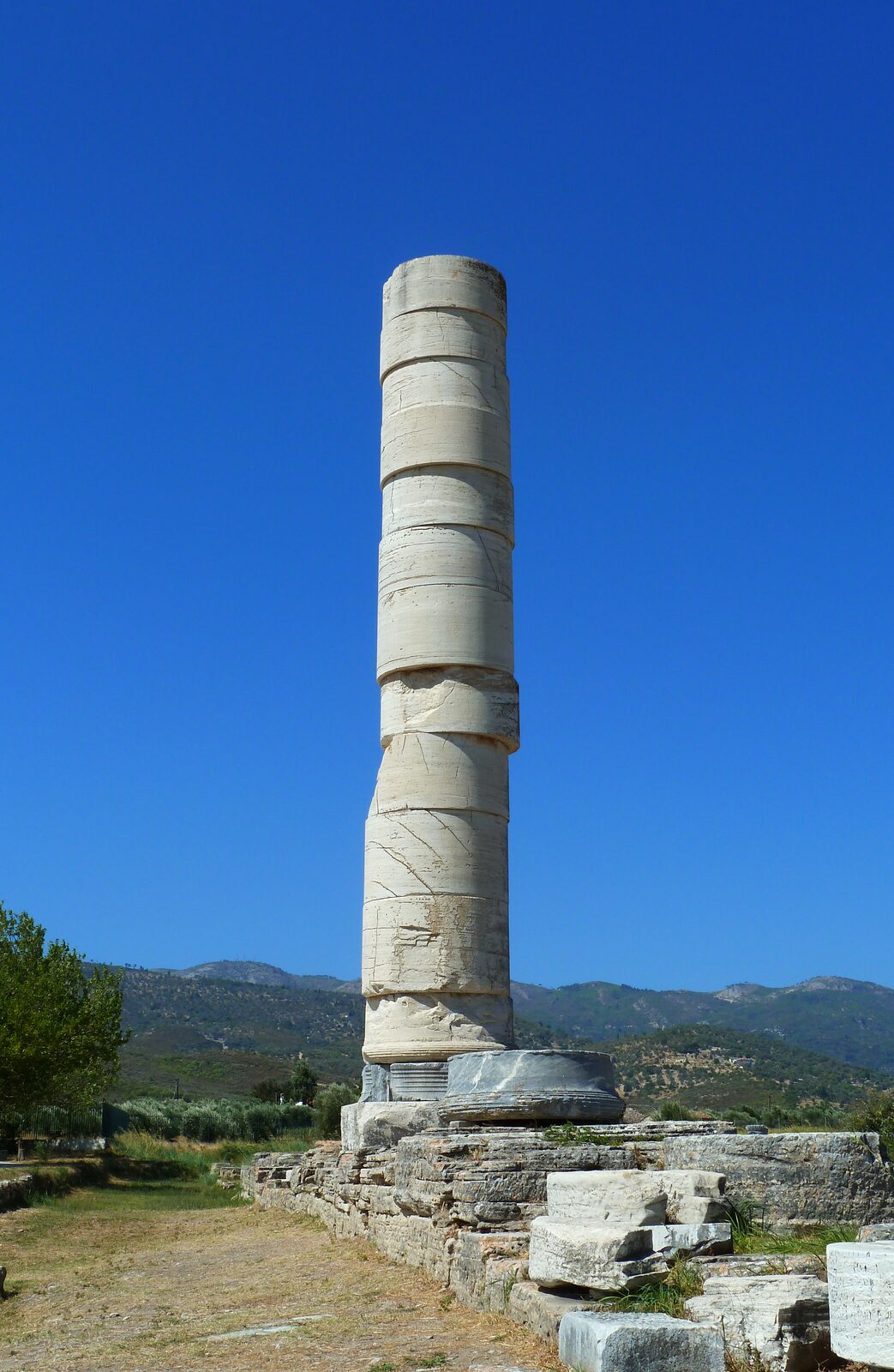
Frequently asked questions
One to two hours is enough for most visitors. It is an atmospheric site rather than a dense one, and easy to combine with the Eupalinos Tunnel and Pythagoreio in a single day.
Add the Eupalinos TunnelYes. Pythagoreio and the Heraion form one UNESCO listing, inscribed in 1992, with two component locations: the fortified ancient city and the Temple of Hera about 6 km away.
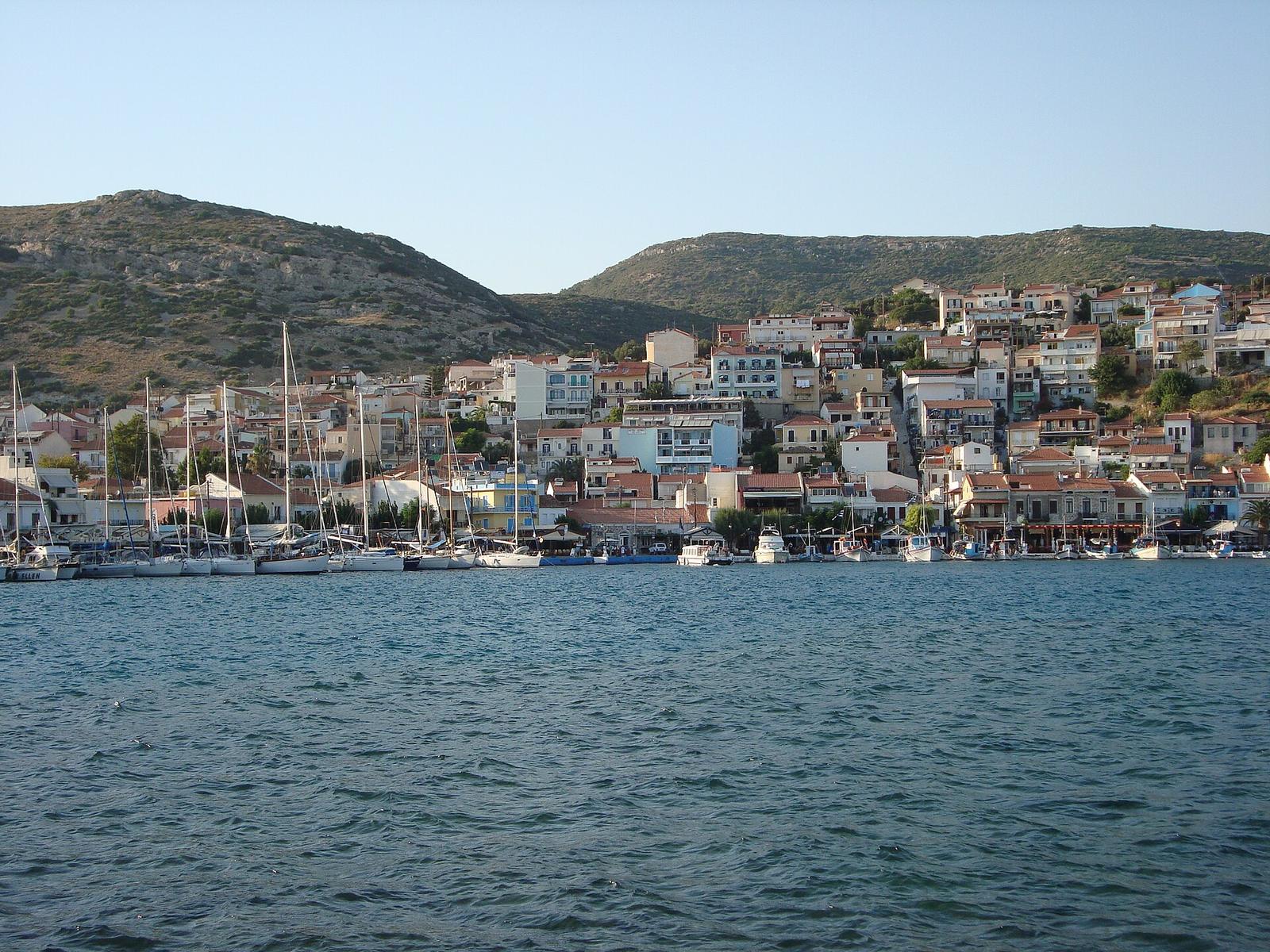
Explore PythagoreioPythagoreio is the closest base, minutes from the airport, with the Heraion and the Eupalinos Tunnel a short drive away. Ireon, next to the site, is 8 km from the airport.
Compare where to stay in SamosPractical details (opening times, prices) change. Verify before you go. Last updated September 2026.