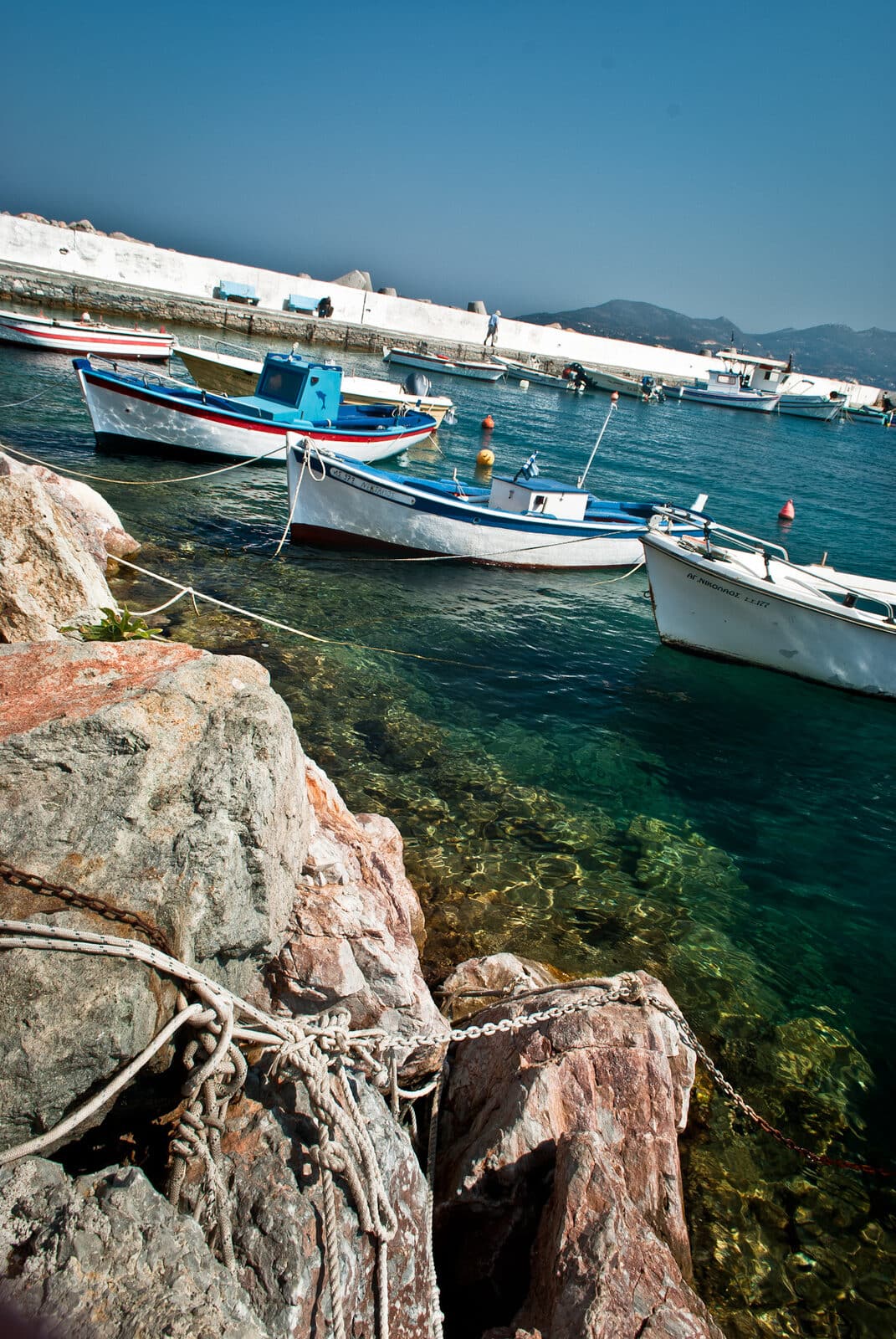
Windsurfing in Kokkari: A Practical Guide
Kokkari's bay is one of the established windsurfing spots of the north-eastern Aegean. Here's what the conditions are actually like.

Summarize this article with:
Kokkari is a genuine windsurfing destination, not just a beach that happens to get breezy: its bay gets clean, side-shore wind almost every summer afternoon. That reliability is why a windsurf centre has operated on the bay since 1997, and why the spot works for first-timers and experienced sailors alike, on different parts of the same water. For the rest of the village, see our Kokkari guide.
Why the wind is so reliable: the mountain behind the village, Karvounis (also called Ampelos, 1,153 metres), generates thermal winds that build through the day, independently of the seasonal meltemi. In practice Kokkari is windy more often than a typical Aegean beach, and the wind blows side-shore, which is the safer direction for learning because it doesn't push you out to sea or onto the beach.
The meltemi season: the meltemi is the strong, dry northerly wind that shapes summer sailing across the Aegean. It usually builds through June, is at its most consistent in July and August, and eases in September. Outside that window, the afternoon thermal still gives Kokkari rideable wind on many days, just less reliably strong.
Who it suits: there's a shallow area a short way upwind of the centre that's used for teaching in flatter water, while the open bay further out gives intermediate and advanced sailors more power and chop. That split makes Kokkari workable for a mixed group: a beginner can take a lesson while someone more experienced goes out for a proper session on the same afternoon.
Gear and lessons: Samos Windsurfing, the centre on Kokkari bay, rents new equipment each year, including windsurf foils and wing foils, plus wetsuits, harnesses, shoes and gloves, so you don't need to bring your own. It is seasonal and weather-dependent, and it doesn't book through this site: check its current opening dates, lesson availability and rental terms directly before you travel.
Planning tips: if windsurfing is the priority, aim for July or August and still check the forecast a few days out, because wind strength varies day to day. Mornings are usually calmer, which suits a lesson or a swim, and the stronger sessions come in the afternoon. A wetsuit is useful early in the season, and beginners should take a lesson before renting alone, because the open bay gets genuinely strong past the teaching area.
Month by month in numbers: the airport climate averages give a useful frame. In May, average winds sit around 12 to 13 km/h and the sea is about 19 °C, so sessions are lighter and a full wetsuit is welcome. In July and August the average climbs to 17 to 18 km/h, the sea reaches about 24 °C and a shorty or no wetsuit is enough for most people. September keeps the sea near 23 °C while the meltemi weakens, and October drops to about 21 °C. These are monthly averages, not a forecast: a single meltemi day can blow far harder than the average suggests, and a calm spell can last several days.
Lesson or rental: how to choose: if you have never stood on a board, book lessons and do not rent alone, because the power in the open bay is the part that catches beginners out. If you have sailed before but not for a while, a first session with a smaller sail close to the teaching area is the sensible way back in. Independent rental makes sense once you can tack, gybe and get back upwind on your own. Lesson formats, rental periods and prices are set by the centre each season, and we do not publish them because they change: ask for the current list before you arrive.
Bring your own gear or rent: the centre renews its equipment each year and rents the accessories as well, so for most visitors flying in, renting is simpler than paying an airline for a board bag. Experienced sailors who are attached to their own harness, boots or wetsuit can bring those light items and rent the board and sail. If you do fly with a full kit, check your airline's sports equipment rules and the transfer from the airport, which is 30 to 40 minutes by road to Kokkari.
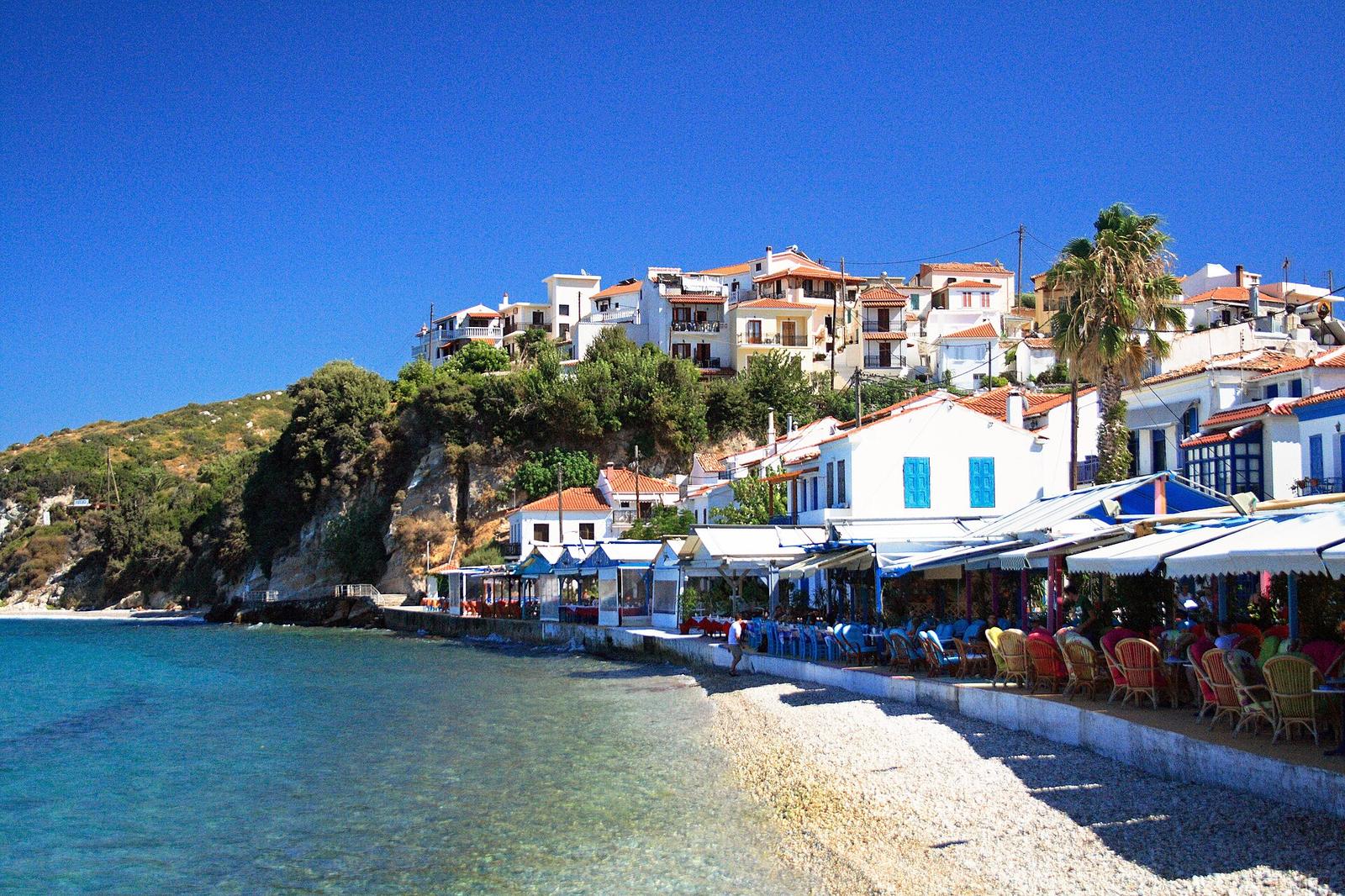
Rough water and safety: the same wind that makes Kokkari good also builds chop in the afternoon. Stay inside the area the centre tells you to use, go out when the centre is open rather than alone at the end of the day, and never sail if you are unsure of getting back upwind. General Greek beach rules apply: a red flag means no swimming, and official British travel advice recommends booking watersports only with a licensed centre. Swimmers who want calm water on a windy afternoon are better off at the pebble coves of Tsamadou and Lemonakia, just west of the village, or on the sheltered south coast at Psili Ammos.
Other spots on the island: Kokkari is the only windsurf centre documented in the sources we consulted for Samos, and it also draws kitesurfers. The north coast as a whole catches the northerly meltemi, while the south coast is usually more sheltered. We have not found an official or reliable source listing other staffed windsurf centres on the island, so we do not name any: if you want to sail elsewhere, you need your own kit and local advice on the day.
Where to stay nearby: sleeping in Kokkari means you can walk to the beach for the afternoon wind and back for dinner. The village splits into the harbourfront and old town, the coast road east towards Tsamadou and Lemonakia, and quieter lanes on the hillside. The wind that suits sailors can make a sea-facing balcony breezy in the afternoon, so ask about orientation when you book. Our Kokkari hotels comparison sets out the areas in detail.
Frequently asked questions
Yes. The wind is side-shore and there's a shallow teaching area with flatter water than the open bay, so beginners don't start in the strongest wind and chop. A lesson first is the sensible way to start.
Explore Kokkari villageJuly and August, in the core meltemi season, give the most consistent strong wind. June and September are still windy, especially in the afternoon, but less reliably so than peak summer.
Check Samos weather by monthYes. The windsurf centre on the bay rents boards, sails, foils and accessories such as wetsuits and harnesses, and offers lessons. Opening dates and prices are seasonal, so confirm them with the centre before you travel.
Plan how you'll get to SamosIt depends on the month. The sea averages about 19 °C in May and 21 °C in October, when a wetsuit makes longer sessions comfortable. In July, August and September, with the sea around 23 to 24 °C, most sailors need little or none. The centre rents wetsuits, so you do not have to pack one.
See what to pack for SamosYes, with sensible habits: the side-shore wind does not push you out to sea, and beginners learn in a shallow, flatter area. Stay in the zone the centre indicates, sail while the centre is open, and respect red flags. The open bay gets strong in the afternoon.
Read our Samos safety guideKokkari is the only windsurf centre we found documented for the island. We have no reliable source for other staffed centres, so plan on Kokkari if you want to rent and take lessons.
Compare Samos' best beachesLast verified 27 September 2026
Sources and further reading
Ready to book?
Browse top-rated Samos tours and activities, checked and rated 4.5 stars or above.
Sponsored link: we may earn a commission if you book, at no extra cost to you.
Ready to go?
Pick a Samos day out and book it in a few taps
Live prices and free cancellation on most tours, confirmed instantly.
Opens our booking partner in a new tab. Prices and availability are shown live there.