Is Samos Safe for Tourists? A Practical Answer
Short answer: no consulted source records tourist-targeted crime on Samos, and the risks that matter here are practical rather than criminal.

Summarize this article with:
British travel advice for Greece never singles out Samos on crime: the realistic hazards here are heat, mountain roads, water and summer wildfire. None of those is unique to the island, and all are manageable with ordinary precautions. A few Greek rules, numbers and health arrangements apply here as well.
Crime and documents: no source consulted for this page gives a crime rate for Samos, and none names an area of the island to avoid. Official advice calls passport, wallet and handbag theft common in crowded metro stations and tourist sites 'particularly in central Athens'. Leave nothing visible in a parked car, lock it, and carry your passport, as police can refuse a photocopy.
Terrorism and public order: the advice warns that terrorists are likely to try to carry out attacks in Greece, which can be indiscriminate, including in places used by foreigners. On 1 July 2026 three improvised incendiary attacks on homes of Greek political figures killed one person and injured four. Strikes can disrupt ferries, flights and borders, and rowdy or indecent behaviour can lead to arrest, especially where drink is involved.
Roads, quads and scooters: a helmet is compulsory for rider and passenger, and riding without one invalidates the insurance. People are seriously injured, and sometimes killed, in quad bike accidents every year, and a quad counts as an extreme sport excluded by many policies. A provisional licence is not valid in Greece, and scooter riders need category A1 at least.
Driving and hire cars: Samos is 43 km long and only 13 km across at its widest, so most journeys climb over mountain roads, and they take longer than a route planner suggests. Drive on the right. Narrow, winding mountain roads and scooters are where most accidents happen, so take your time. Check that your rental insurance covers mountain and unpaved roads, as some standard policies exclude them, and bring your licence plus an International Driving Permit if yours requires one.
Sun and heat: the Aegean sun is strong even in May and September, and many hiking trails have little or no shade. Pack high-factor sunscreen, a hat and sunglasses, carry a reusable bottle and walk in the morning. With children, the main risks are practical too: strong midday sun, pebbles that are hard on small feet, and mountain roads that call for careful driving. If you rent a car, reserve a child seat when you book.
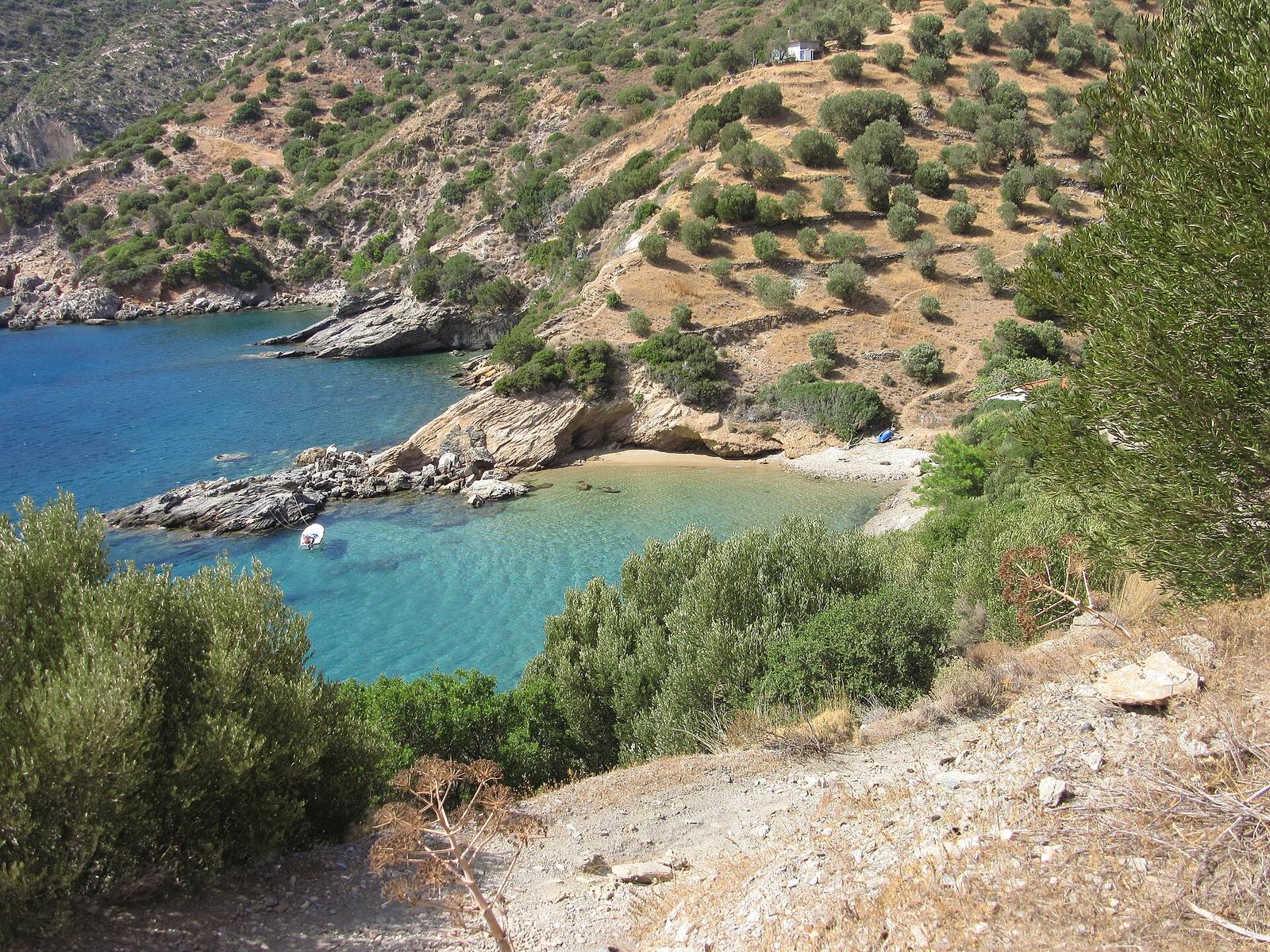
Swimming, watersports and hiking: a red flag means no swimming, and where there are no lifeguards, flags or signs, ask a local before entering the water. Never dive into water you do not know, as people drown in Greece every year. Book watersports with a licensed centre. On the trail, carry water, a hat and a charged phone, avoid the midday sun and tell someone your route.
Beaches and sea life: strong winds, the summer meltemi above all, can make the sea rough on exposed beaches, so choose a sheltered bay on a windy day. Sea urchins live on rocky shores, and Tsamadou and Lemonakia are pebble beaches: water shoes help. Many beaches have no facilities at all, so bring your own water and shade.
Fire, earthquakes and emergencies: wildfire risk runs from April to October, and causing a forest fire is a criminal offence even when accidental, so light no fires and leave no glass. Earthquakes are possible: follow local instructions and call 112 for police, fire and ambulance, while 166 is the ambulance line. Police in Samos Town answer 22730 87310, the fire service 22730 23062 and first aid 22730 22222.
Health: tap water is safe to drink on Samos, though bottled water is still recommended there. The regional unit has two hospitals and two health centres: Samos Town's hospital has intensive care and dialysis, and the Karlovasi health centre runs 24-hour cover, 365 days a year. Pharmacies keep variable hours and post 24-hour rotas on their doors. A GHIC or EHIC covers state care, without replacing travel insurance.
Out of season: many smaller hotels and tavernas close between November and April, so trails, beaches and villages are much emptier. Walk with a charged phone and tell someone your plans, and if you stay in the west, remember that the Karlovasi health centre keeps 24-hour cover all year.
Frequently asked questions
No source consulted for this page records tourist-targeted crime on the island, and solo travel here is ordinary. Official advice for Greece suggests saving your accommodation address in your maps app, keeping a group chat going, watching your drink, and not letting anyone walk home alone.
Read the full Samos travel guideRoads and water, not crime. People are seriously injured in quad bike accidents every year, helmets are compulsory for rider and passenger, and many travel policies exclude quads altogether. On the coast, a red flag means no swimming and children should stay within arm's reach.
See driving and getting-around adviceExperienced walkers do it independently, but plan the route first, start early and avoid the strongest sun. Take a hat and plenty of water, and carry a map, GPS and a charged phone. Tell someone your route, and make sure your insurance covers mountain rescue and helicopter evacuation.
Read the Mount Kerkis hiking guideYes. The strait to Turkey is an ordinary international border with passport control on both sides, and no source consulted for this page names it as an area to avoid. Carry your passport if you take the ferry to Kusadasi.
Read about Samos and the Turkish coastReady to go?
Pick a Samos day out and book it in a few taps
Live prices and free cancellation on most tours, confirmed instantly.