Best Beaches in Samos: A Complete Guide
The north coast takes the meltemi in the afternoon; the south-east stays glassy. Most of Samos is pebble and pine, with one sandy exception: this is how to choose a beach by the wind rather than by a ranking.

Summarize this article with:
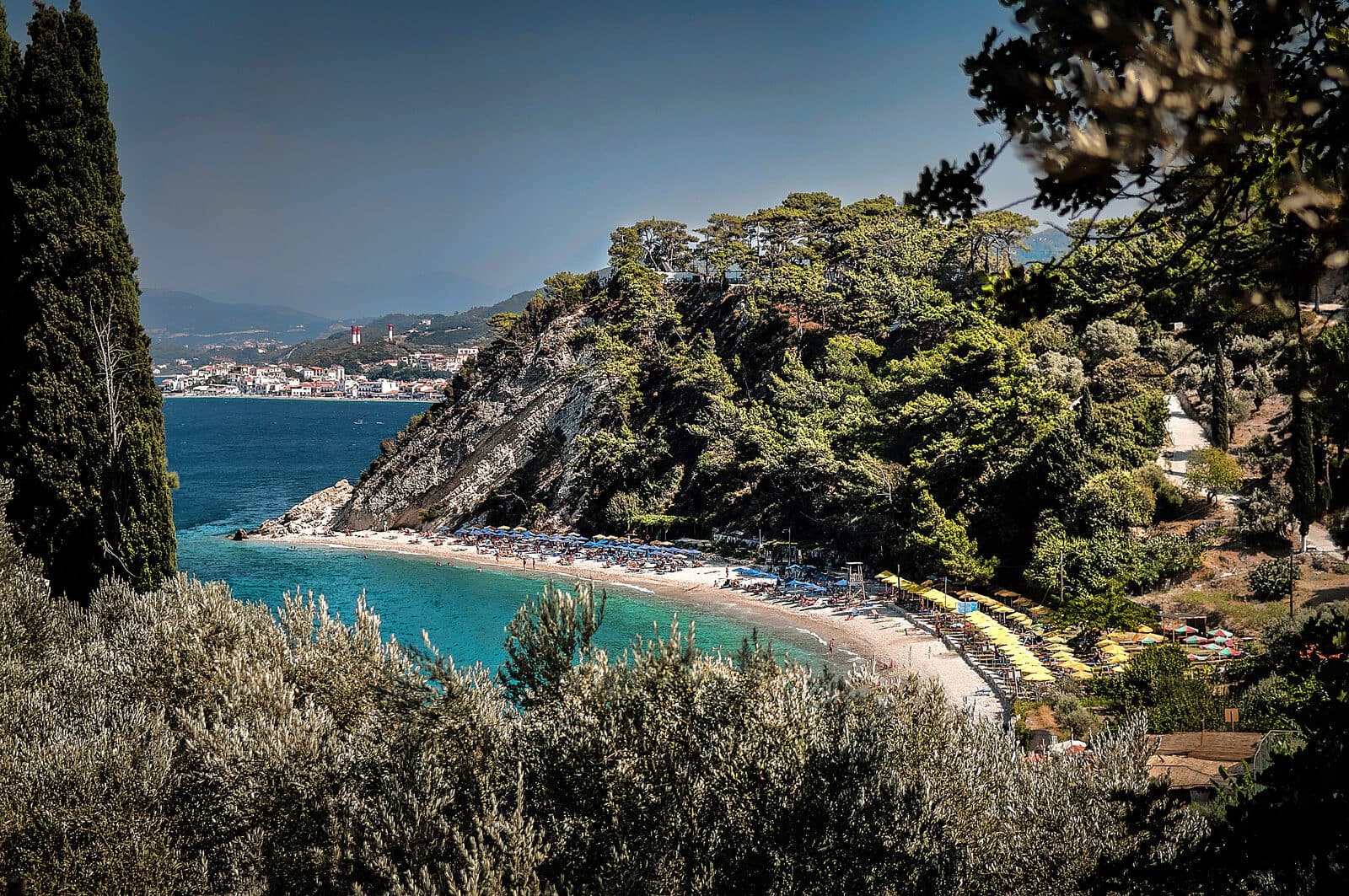
Samos is not a beach island. It is an island with beaches, and that difference decides whether your day works. The coast is mostly pebble and shingle, backed by pine forest and mountains that come down to the water; Psili Ammos is the sandy exception. Compare them by coast, by wind and by how far you are willing to walk, then choose your base.
The meltemi compass
On Samos you pick the coast by the wind, not by a ranking
The north coast from Kokkari west to Karlovasi faces the open northern Aegean. From June to September the meltemi blows down it most afternoons, which is why Kokkari's village beach belongs to windsurfers and kitesurfers, and why Tsamadou and Lemonakia can turn choppy by mid-afternoon. The western end of Tsamadou is usually calmer.
The south-east is a different island: Psili Ammos is sheltered, shallow and sandy, and it is the one place on Samos where a small child and a windy day are not a contradiction.
The west coast, from Potami down to Votsalakia, offers space rather than shelter: longer beaches, fewer people, the same pebbles underfoot.
Standing on a pebble beach
Seen
Water clear enough that the stones look lit from below, and at Tsamadou pine trees that run down almost to the shoreline.
Heard
The hiss and knock of shingle as each wave drains back. Samos has no sandy hush.
Felt
Pebbles hot underfoot by noon, and water shoes quietly earning their place in your bag.
A day built around the wind
The order that works on most summer days.
07:30
Swim before the wind. The north-coast coves are glassy and empty, and this is when locals take their swim.
13:00
Lunch in the shade of a taverna and let the meltemi have the afternoon.
17:30
The wind usually eases towards evening: time for a second swim at the western end of Tsamadou, or anywhere on the south coast.
If one beach is not enough
Tsamadou and Lemonakia
The pair west of Kokkari in detail: access, the naturist end, the bus stop and the tavernas.
See both beaches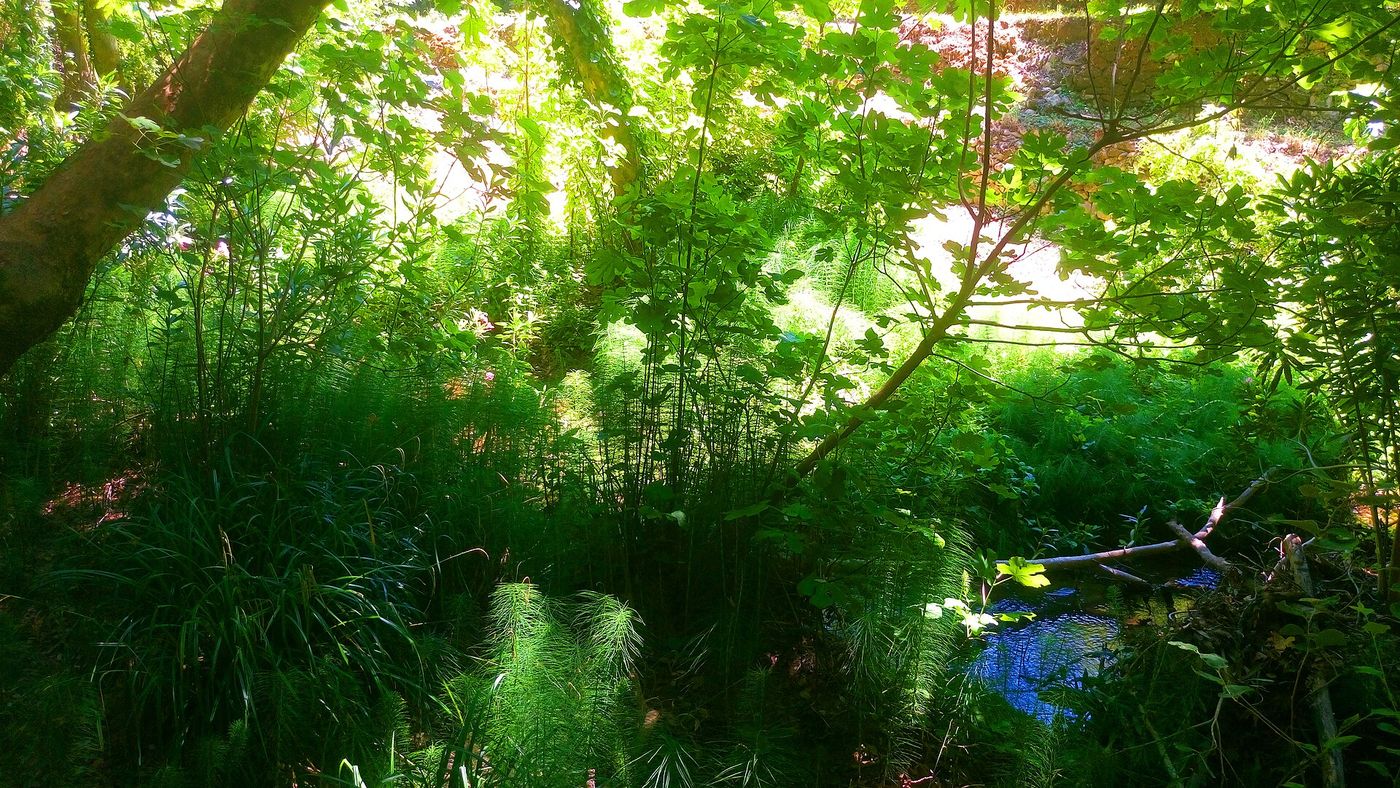
Potami and the waterfalls
The trailhead for Seitani, with a shaded gorge and cold pools twenty minutes inland.
Walk to the falls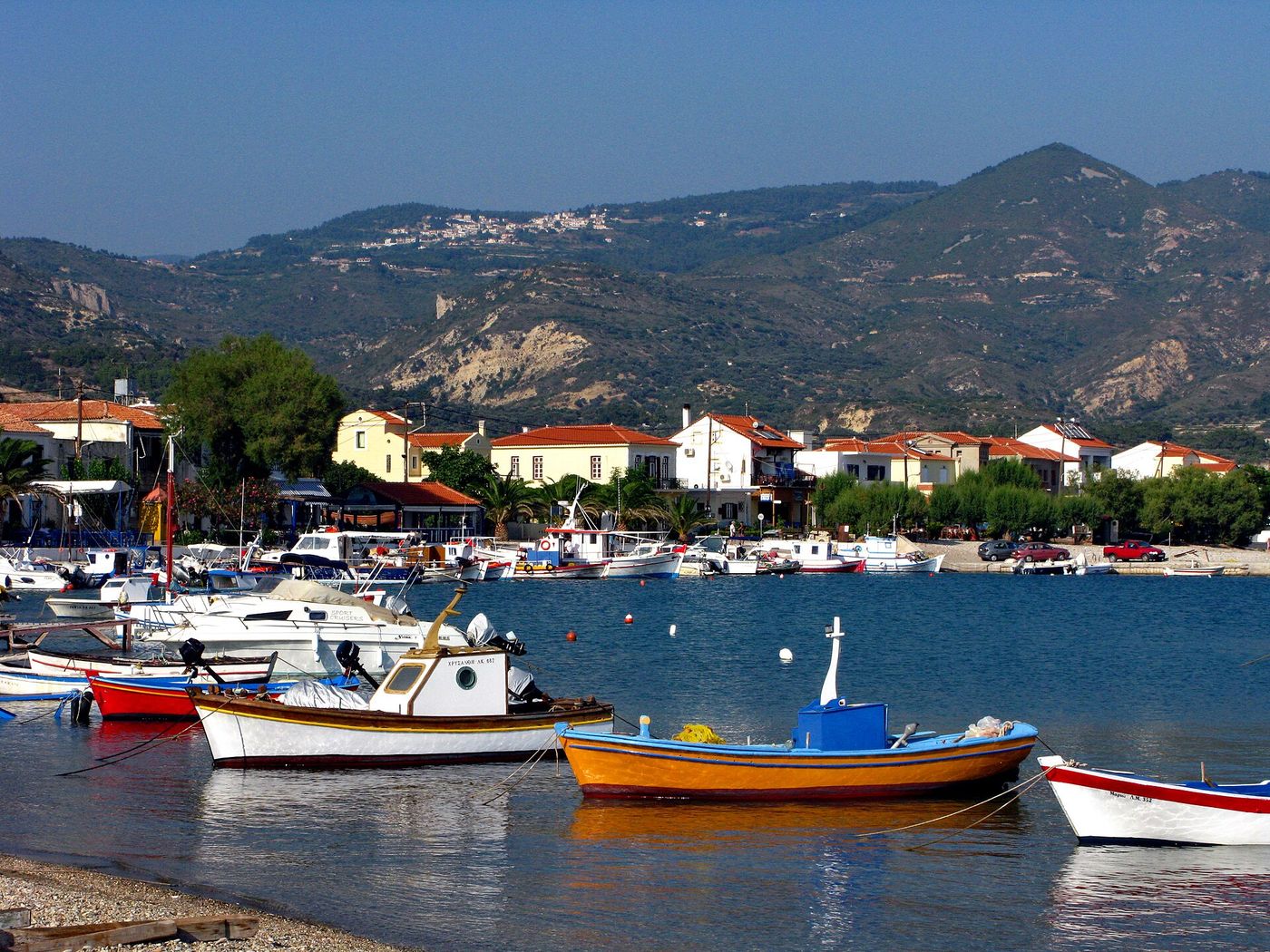
Where to stay
Kokkari, Pythagoreio, Vathy or the quiet west coast: the base decides which beaches you actually use.
Compare basesBefore you go
What the photographs do not show
Mikro and Megalo Seitani have no sunbeds, no beach bar and no shop. Bring water, food, shade, shoes that can handle rock rather than sandals, and a bag for your rubbish.
Water shoes help on almost every beach here. At Tsamadou the bottom is rocky and drops steeply, which makes getting in and out awkward.
Kasonisi islet is a boat stop rather than a beach day: most visitors see it as part of a tour. And in July and August, Tsamadou and Lemonakia are busy because they are a short walk from Kokkari's hotels.
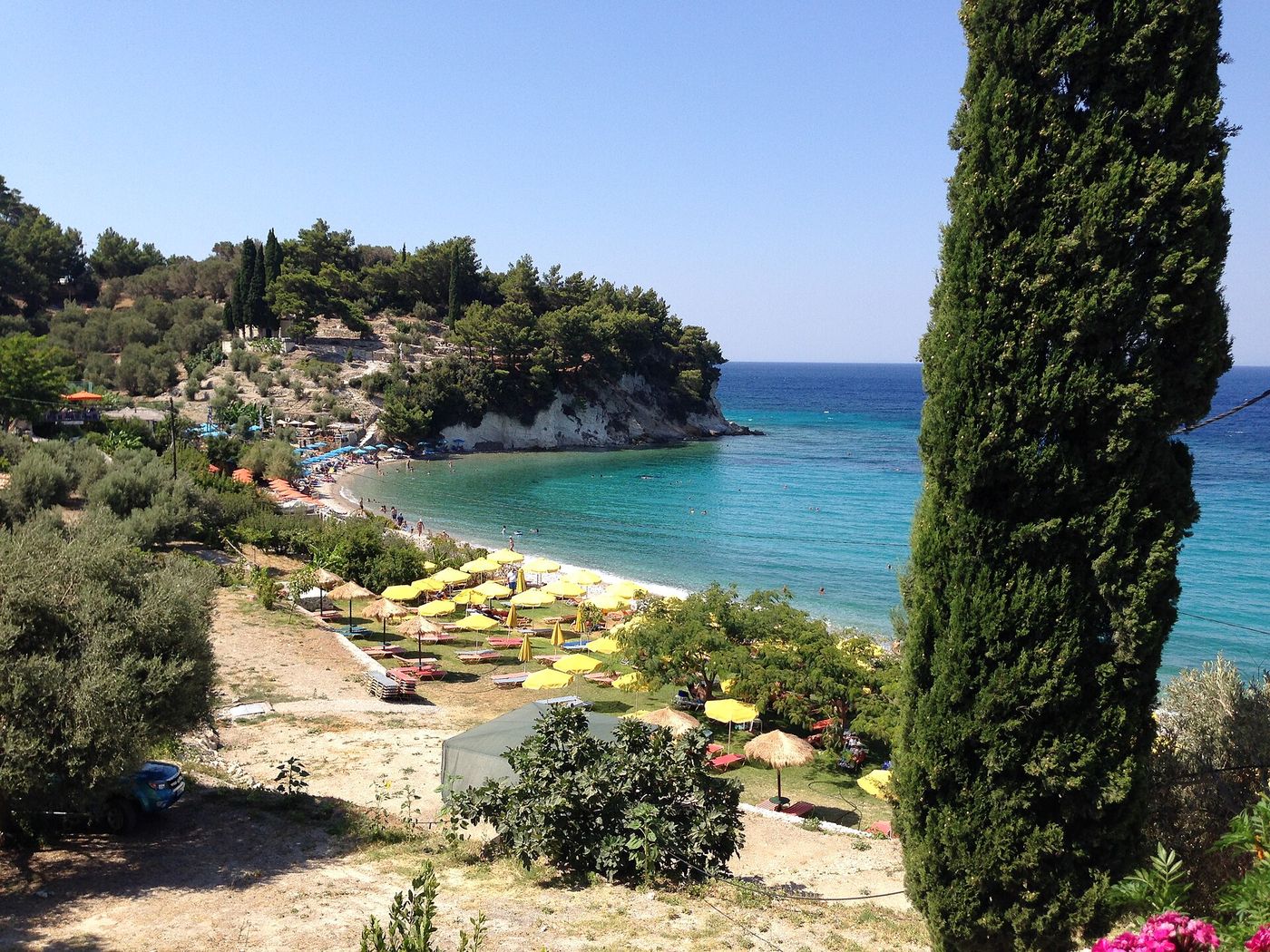
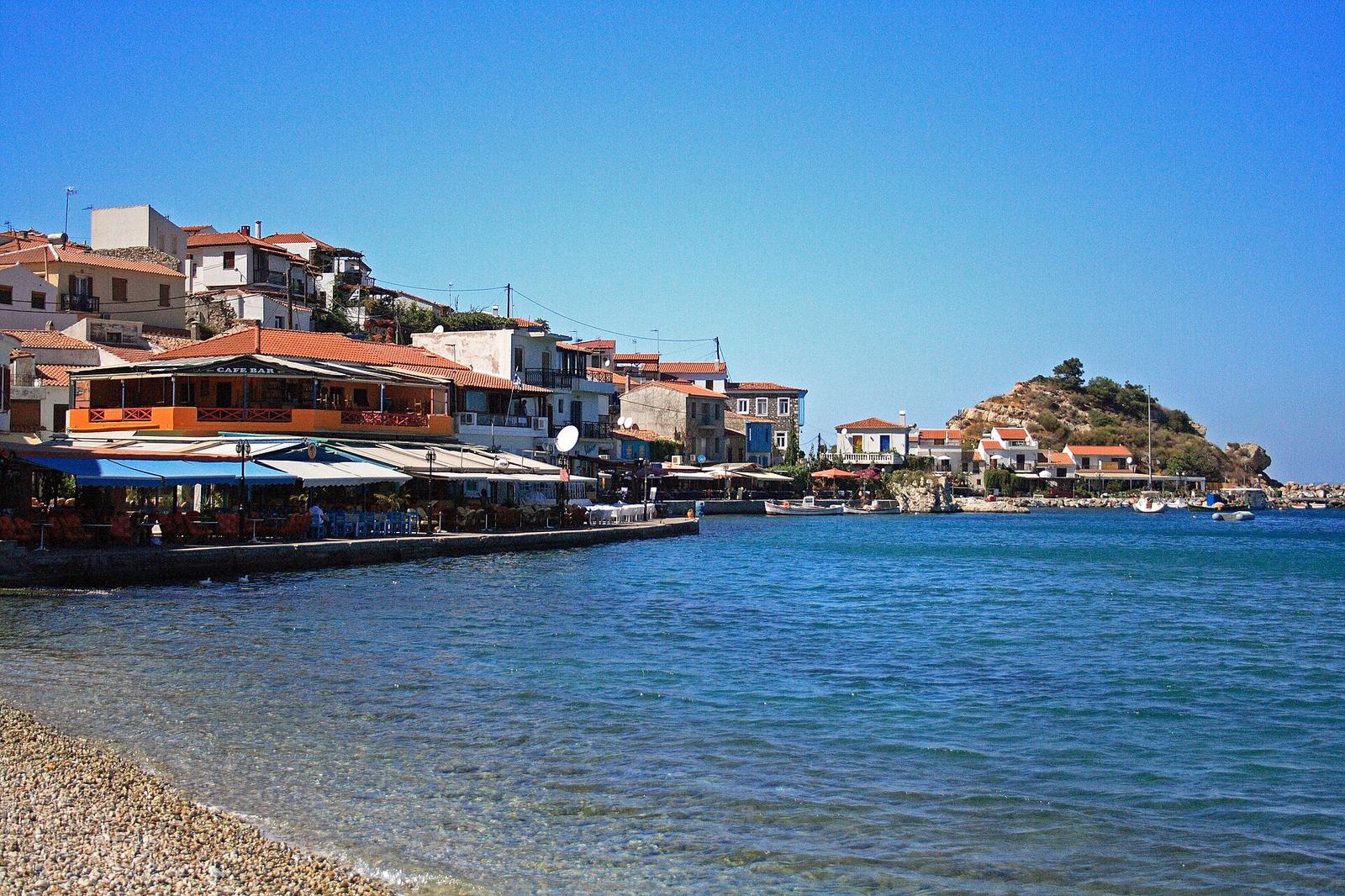
Tsamadou and Lemonakia, just west of Kokkari, are the island's best-known pair: clear water, two tavernas, and pine trees running down almost to the shoreline. Tsamadou has an unofficial naturist section at its far end. Both are pebble beaches, so water shoes help, and both get busy in July and August since they're a short walk from Kokkari's hotels.
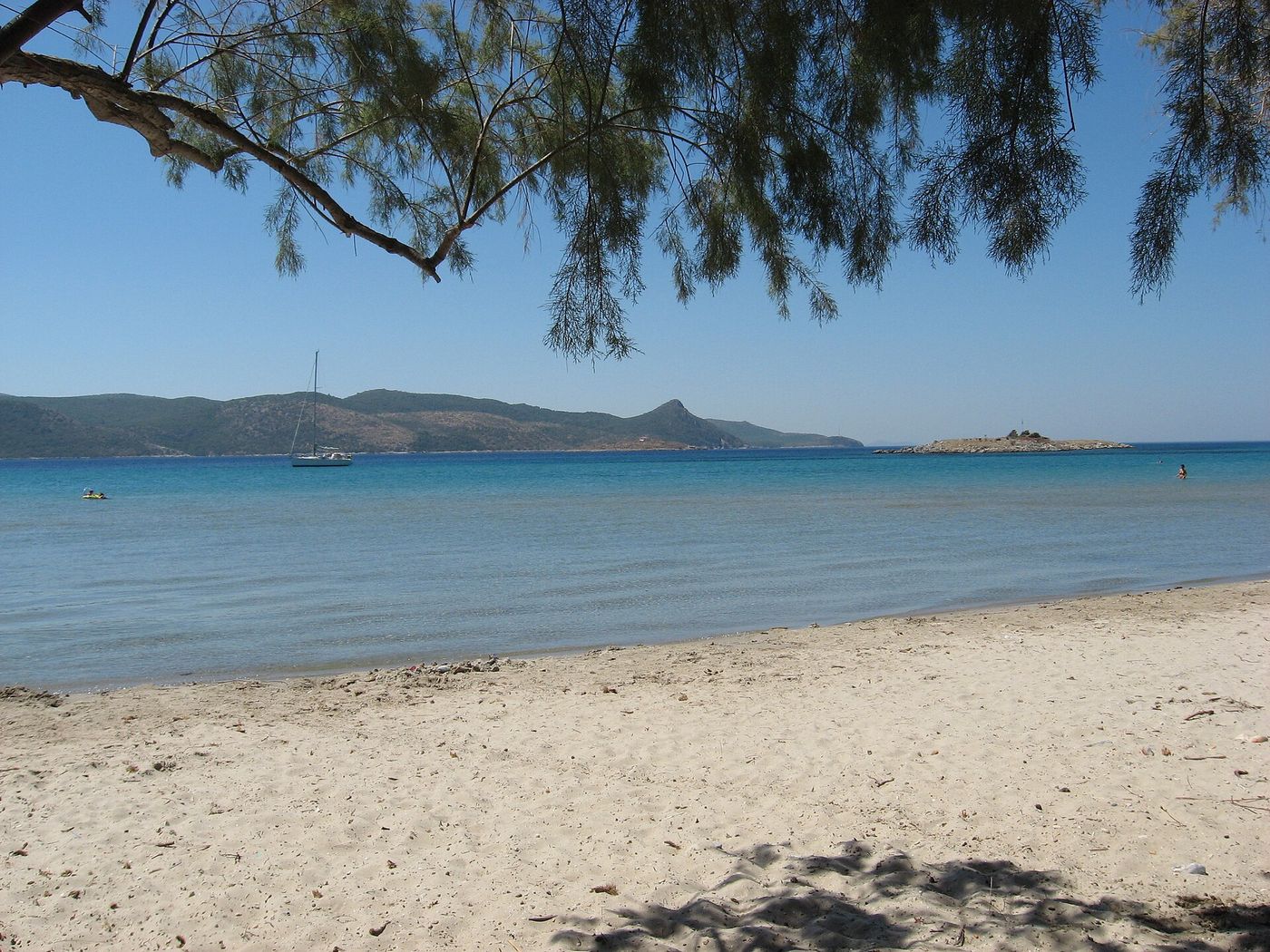
Psili Ammos, near the airport and Pythagoreio, is the island's most family-friendly beach: shallow, sandy, and sheltered, which is rare on Samos. It's the pick if you have young children or just want soft sand instead of pebbles.
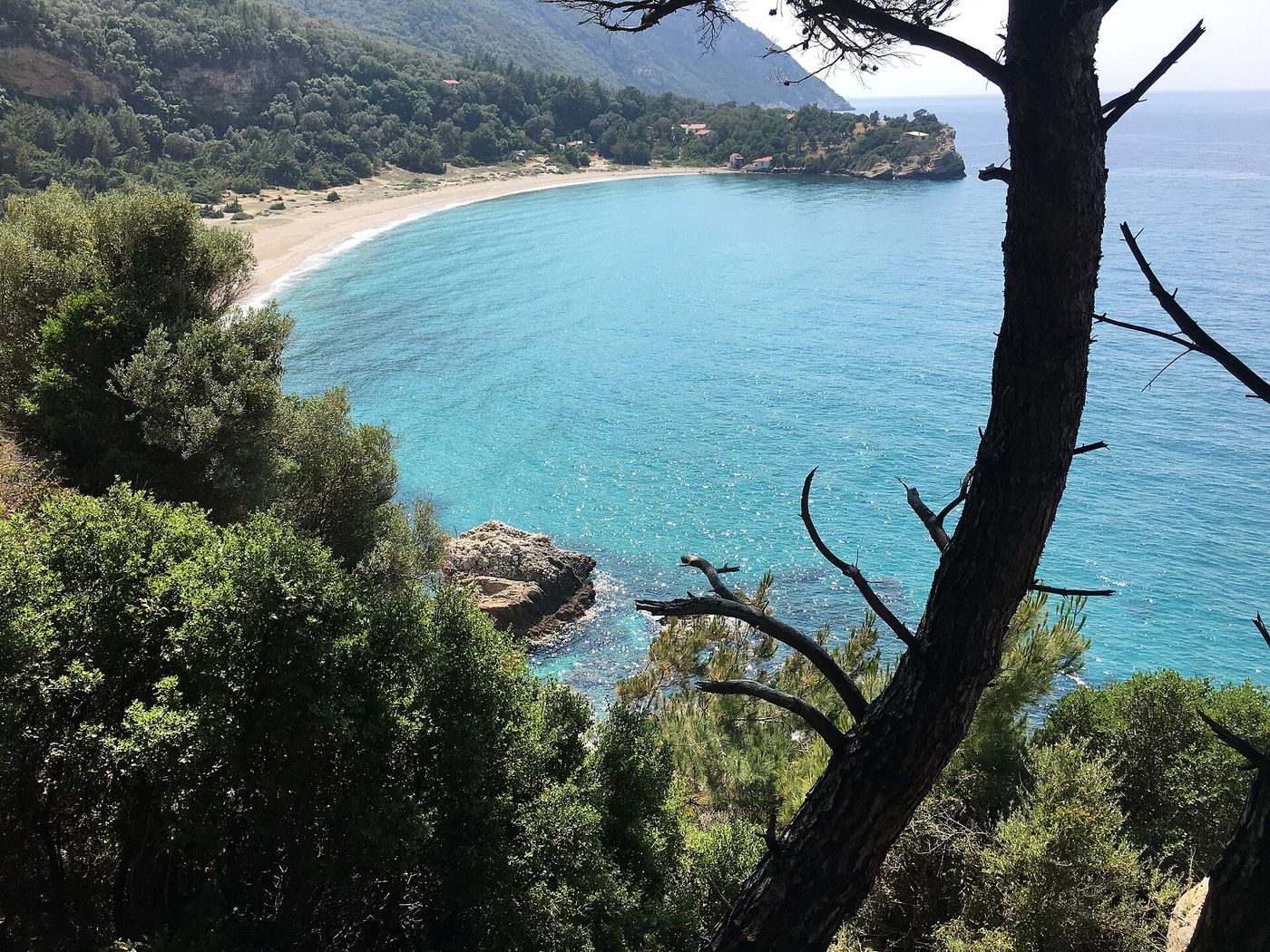
Mikro and Megalo Seitani, on the north-west coast past Karlovasi, are the reward for more effort: reachable by a coastal path or by boat, with no sunbeds, no beach bar, and genuinely clear water. Bring your own shade, water and food.
Kasonisi islet, off the south-east coast near Pythagoreio, is a turquoise-water spot best reached by boat rather than on foot; most visitors see it as part of a boat tour rather than a stand-alone beach day.
Votsalakia, on the quieter west coast near Marathokampos, is a long stretch with more space and fewer crowds than the east-coast beaches, backed by a small resort strip rather than a village.
Psili Ammos, near Pythagoreio and a short drive from Samos Airport, is the island's clearest sandy exception: its name means 'fine sand' in Greek, and the bay is sheltered, with shallow, gently sloping water. That makes it a very different swim from the pebble coves of the north coast, and noticeably easier for small children or anyone who prefers sand underfoot. Sunbeds, umbrellas and a few tavernas operate in season, and it is busiest in July and August. See Psili Ammos.
Mikro and Megalo Seitani, on the north-west coast past Karlovasi, have no road access. A coastal path from Potami beach reaches Megalo Seitani in roughly 45-60 minutes over uneven, sometimes rocky ground, and Mikro Seitani is a short scramble further on; in summer, small boats from Karlovasi or Potami are the easier option. There are no sunbeds, no beach bar and no shop, so bring water, food, shade, proper shoes rather than sandals, and a bag for your rubbish. See Mikro and Megalo Seitani.
Kokkari and the north coast: the village beach is known for windsurfing and kitesurfing, thanks to a consistent afternoon wind, while Tsamadou and Lemonakia lie just west along the road to Karlovasi, Tsamadou about 2 km from the village. This coast faces the northern Aegean, and on meltemi days the wind can raise waves along the whole shore, which suits windsurfers more than swimmers; the western end of Tsamadou is usually calmer. See Kokkari and Tsamadou and Lemonakia.
Potami and the west: Potami beach sits about 2 km past Karlovasi port, where the coast road ends, with a café, a seafront restaurant and parking at the beach. Behind it, a signposted path leads into a shaded gorge towards the Potami waterfalls, about 20 minutes of easy walking, then a swim through cold natural pools to reach the falls, so pack water shoes and a dry bag. The same beach is the starting point of the coastal path to Seitani. See Potami.
Frequently asked questions
Psili Ammos, near Pythagoreio: it's sandy, shallow and sheltered, which is unusual on an island where most beaches are pebble. Tsamadou and Lemonakia work too if your children are older and comfortable with pebbles and water shoes.
See Kasonisi islet, reachable by boatMostly pebble and shingle. Psili Ammos is the main sandy exception; a few coves along the west coast also have patches of sand mixed with shingle.
See Tsamadou and Lemonakia in detailThe far end of Tsamadou beach, near Kokkari, has an unofficial naturist section. It isn't signposted or officially designated, but it's well known locally.
Explore KokkariOn foot via a coastal path from Potami (roughly 45-60 minutes, uneven ground), or by small boat from Karlovasi or Potami in summer. There are no facilities at either beach, so bring your own water, shade and food.
See Potami waterfalls, the trailheadKokkari has its own village beach, better known for windsurfing than for calm swimming. For a swim, Lemonakia and Tsamadou lie just west along the coast road to Karlovasi, Tsamadou about 2 km from the village, and both can be reached by car or on the Vathy–Kokkari–Karlovasi bus line, which has a Tsamadou stop.
See Tsamadou and Lemonakia in detailPotami Beach is at the end of the coast road, about 2 km past Karlovasi port, with a café, a seafront restaurant and parking at the beach. It is also the trailhead for the shaded path to the Potami waterfalls and for the coastal path to Mikro and Megalo Seitani, so many visitors combine a swim with a walk.
See Potami waterfalls, the trailheadThey help on most beaches, since the coastline is mostly pebble and shingle. At Tsamadou the bottom is rocky and drops steeply, which makes getting in and out tricky, and the Potami waterfalls walk needs shoes that can get wet; Psili Ammos, with its sand, is the main beach where you can do without.
See Tsamadou and Lemonakia in detailReady to book?
Browse top-rated Samos tours and activities, checked and rated 4.5 stars or above.
Sponsored link: we may earn a commission if you book, at no extra cost to you.
Ready to go?
Pick a Samos day out and book it in a few taps
Live prices and free cancellation on most tours, confirmed instantly.
Opens our booking partner in a new tab. Prices and availability are shown live there.