Samos Bird Species: A Guide for Birdwatchers
Samos lies between two major wetlands on the Asia Minor coast, and its mix of mountain, wetland and coastal habitats packs a lot of variety into a small island.

Summarize this article with:
Samos isn't marketed as a birdwatching destination the way some Greek wetlands are, which is exactly why it's worth knowing about if you're already interested. The island's habitat range, from the cliffs and forests of Mount Kerkis to the Alyki wetland beside Psili Ammos beach, supports resident, wintering and migratory birds in the same small area. Two of its Natura 2000 sites, Oros Kerkis (GR4120008) and Alyki Psilis Ammou (GR4120007), are Special Protection Areas under the EU Birds Directive.
How many species? The regional tourism office says 127 bird species have been observed on Samos, mostly around the wetlands and on Mount Kerkis, but also on plains, in gorges and in forests. A local guide goes further and writes that more than 150 protected species find refuge at the Alyki alone, so the figures depend on who is counting.
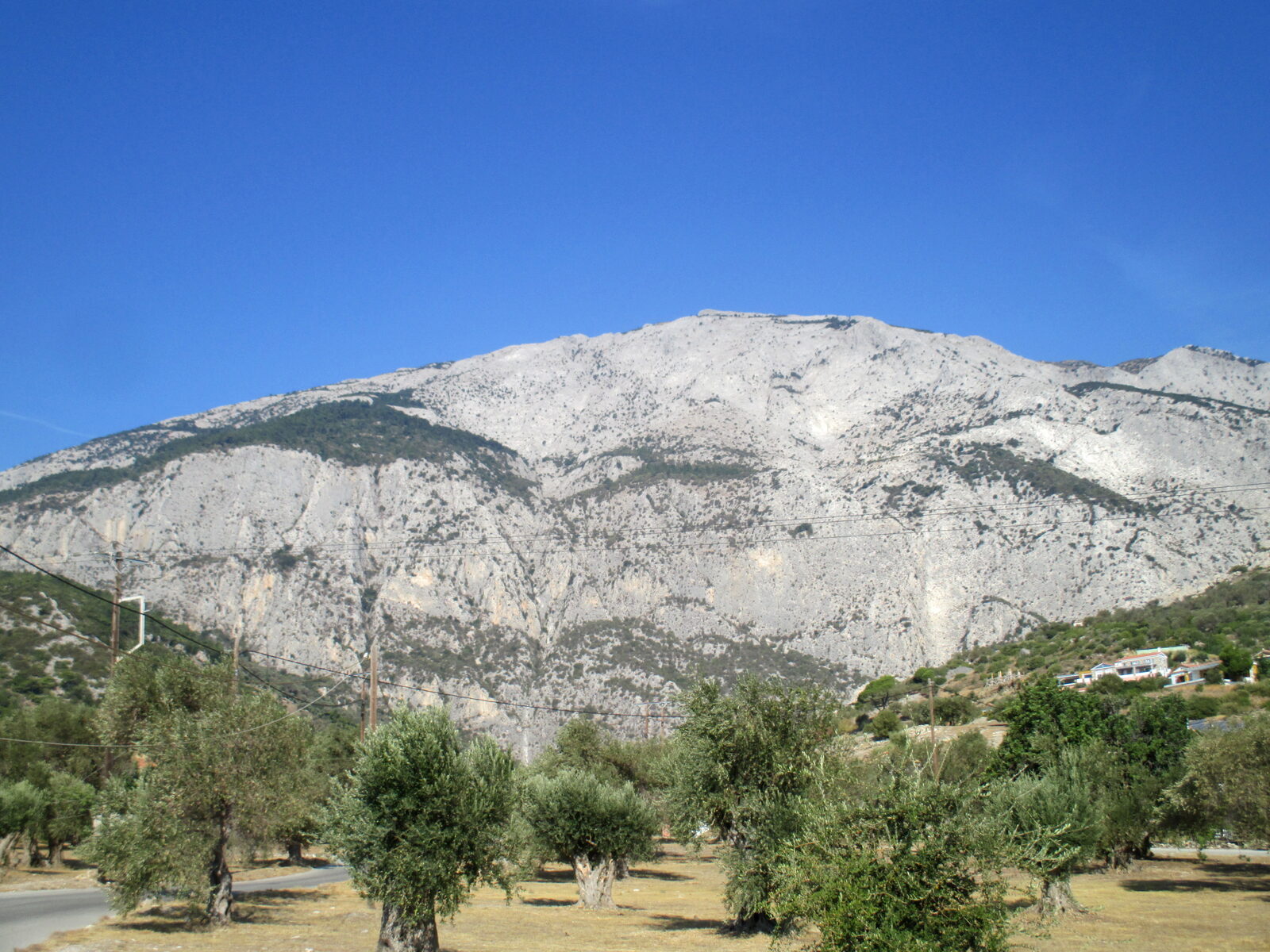
Mount Kerkis and the mountains are the place to look for raptors. The official tourism source lists golden eagle, Bonelli's eagle, Eleonora's falcon, short-toed eagle, greater spotted eagle, Egyptian vulture and osprey on the island, along with eagle owl and Athena owl. Steep cliffs are the best vantage points for birds of prey.
Rocky slopes and villages. Lower down, rocky ground holds rock thrush, rock sparrow and rock pigeon, and hoopoe, wheatear and cirl bunting are also on the official list. The stone water reservoirs (sterna) in the mountains serve as drinking points for birds, so a quiet wait near one on a hot afternoon can pay off.
The Kerkis protected area. Oros Kerkis (GR4120008) covers 9,117.77 ha and is a Special Protection Area for birds. Its official habitat list includes juniper scrub, Aegean phrygana, limestone cliffs and caves that are not open to tourism. Around 80 caves have been recorded in the island's mountains, closed to visitors to protect bats and jackdaws.
Reaching the heights. The marked routes to Vigla, the top of Kerkis, are all graded 5 out of 5: Panagia Makrini to the summit is 2.6 km in about 2 hours 15 minutes, while the route from Votsalakia takes about 6 hours. Carry plenty of water, avoid the midday heat, and tell someone your route.
The Ampelos massif. In the centre of the island, the Ampelos (Karvounis) rises to 1,153 m at Profitis Elias. Its slopes carry pine forest, Turkish pine lower down and black pine higher up, over old farming terraces. It is a Natura 2000 site (GR4120002), and a gentler walking option than Kerkis if you want forest and valley habitats.
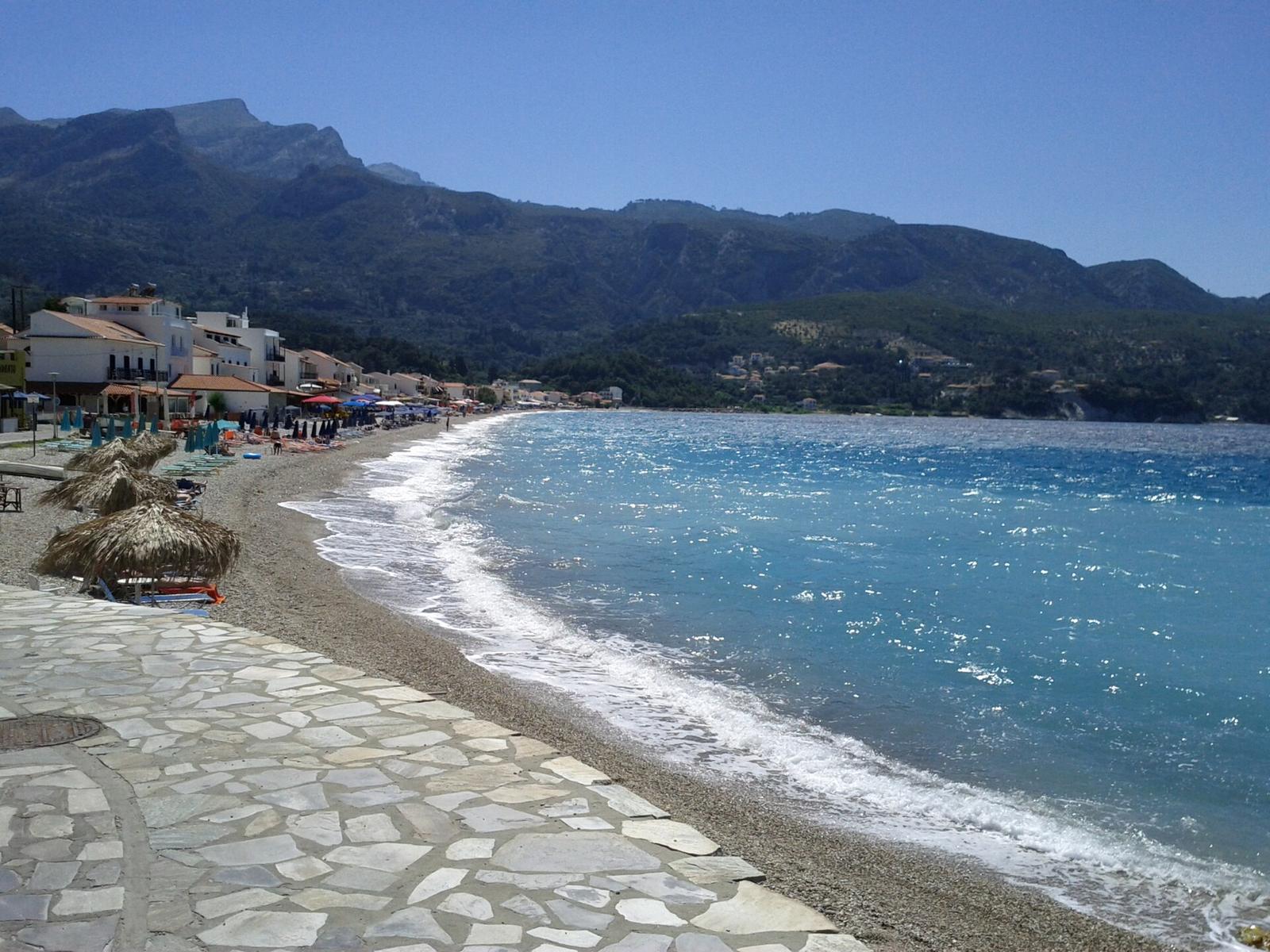
The Alyki wetland, on the south-east coast near Paleokastro, is the island's main waterbird site. It was a saltworks until 1965, and nature has since turned it into a rich wetland. In winter the clay soil holds water and forms a shallow lake, with a maximum depth of around 70 cm, that attracts large numbers of migrants.
Birds of the Alyki. Species listed there include greater flamingo, black-winged stilt, northern shoveler, Eurasian wigeon, common shelduck, western marsh harrier, Eurasian bittern, black-tailed godwit and common kingfisher. The official Natura 2000 form records 304 wintering flamingos, 107 wigeon, 110–130 mallard, 40 teal and 4 shoveler.
Less obvious names on the list. The Natura 2000 form for the Alyki also lists Eleonora's falcon, lesser kestrel and peregrine, little egret, cattle egret, night heron and little bittern, Kentish plover, slender-billed gull and common tern. Ruddy shelduck is flagged as a species of concern, and the passerines include Cretzschmar's bunting, ortolan, lesser grey shrike and nightingale.
A protected lagoon. The Alyki Psilis Ammou site (GR4120007) was designated a Special Protection Area in October 2001 and covers 42.74 ha, classed as coastal lagoon. It sits inside a larger Natura 2000 site, Paralia Alyki (GR4120001), listed since 1995, which also takes in Posidonia seagrass beds, scrub and sand.
From salt to birds. Salt was worked here for centuries. Between 1919 and 1931 the pans produced an average of 1,900 tonnes a year, about 2.6% of Greece's salt. Production stopped in 1965 because it no longer paid, and the site closed for good in 1982, when the last guard's post was abolished.
More than birds. The Alyki also shelters rare plants, among them Iris orientalis, bumblebee orchid, sea daffodil and Thymus samius, a thyme found only on Samos. The local guide lists golden jackal, Mediterranean chameleon, Greek tortoise and several snakes, including the Ottoman viper, so watch where you step in long grass.
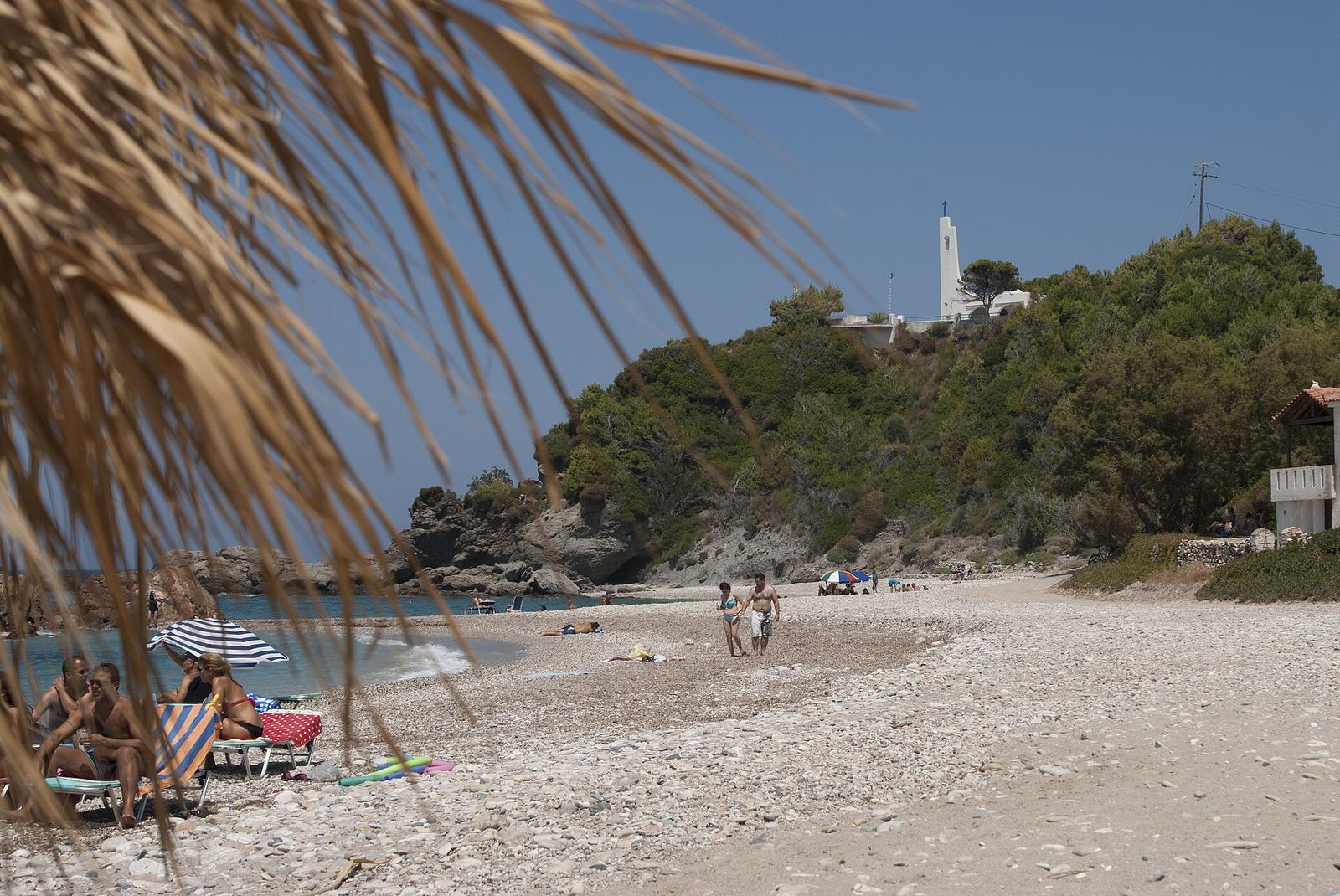
Other good spots: the official tourism source also points to the Potami wetlands near Karlovasi and the wetland at the old airport. The Alyki's richness is partly down to geography: it sits between two important wetlands on the Asia Minor coast, the Meander estuary 23 km to the south-east and the Kaystros estuary 35 km to the north.
Waders on passage. Lapwing, whimbrel, Eurasian curlew, curlew sandpiper, little stint, redshank and greenshank gather on the wetlands during migration, according to the official Natura 2000 form for Kerkis. Scan the muddy edges slowly with binoculars: small waders blend into the ground and are easy to miss.
Best time to visit for birdwatching: migrants cross the island in spring and autumn, which generally offers the most variety. Winter (roughly November to April) is the season for the Alyki, when the lake is full and ducks and flamingos are present.
Summer is quieter. From roughly May to October the water evaporates and the wetland dries out, so waterbirds are scarce until the next cycle, though raptors remain on the mountains. A summer trip is better spent on the cliffs of Kerkis early in the morning than at the dry lagoon.
Practical tips: bring binoculars and plan to explore independently. We could not confirm any hides, boardwalks or observation platforms at the Alyki, so this is self-guided birdwatching. Watch from the edges of the wetland without disturbing the birds, since the site is protected, and note that parking at Psili Ammos beach is paid.
Walking in. The marked coastal route from Kerveli via Posidonio, Klima and Psili Ammos to Paleokastro links the south-east coast to the Alyki on foot: 18 km, about 7 hours, graded 3 out of 5. Early morning is the most active time for birds, and the Alyki is easy to combine with a swim at Psili Ammos.
Frequently asked questions
Yes, it's an underrated spot: raptors such as golden eagle, Bonelli's eagle and Eleonora's falcon on the mountains, and flamingos, ducks and waders at the Alyki wetland in winter. Two of the island's Natura 2000 sites are protected specifically for birds, though there is little dedicated birdwatching infrastructure.
See Mount Kerkis, the best area for raptorsSpring and autumn, when migrants cross the island, offer the widest variety. Winter (roughly November to April) is best for the Alyki wetland, when its shallow lake fills and flamingos and ducks arrive; it dries out in summer.
See what Samos is like in MayThe Alyki wetland beside Psili Ammos for flamingos, ducks and waders, the cliffs and slopes of Mount Kerkis for raptors, and the Potami wetlands near Karlovasi and the old airport wetland for smaller waterbird sites.
See Vathy, the island capitalReady to book?
Browse top-rated Samos tours and activities, checked and rated 4.5 stars or above.
Sponsored link: we may earn a commission if you book, at no extra cost to you.
Ready to go?
Pick a Samos day out and book it in a few taps
Live prices and free cancellation on most tours, confirmed instantly.
Opens our booking partner in a new tab. Prices and availability are shown live there.